





Introduction: Ancient Rome on Foot — from the Roman Forum to the Colosseum
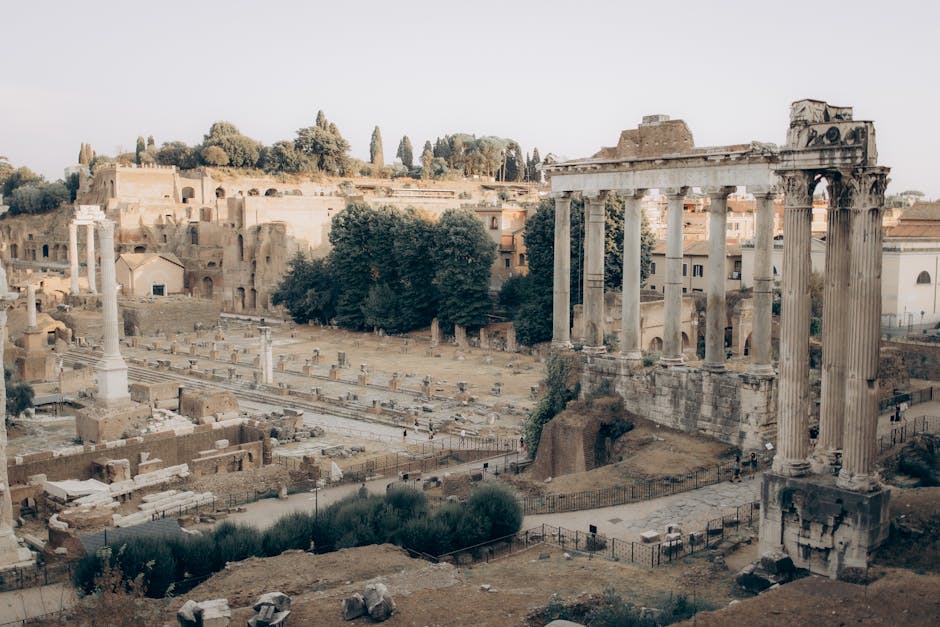
The stroll linking the Roman Forum (Foro Romano) to the Colosseum (Colosseo) is one of Rome’s most iconic urban and historic experiences. In just a few hundred meters you cross more than a thousand years of history, moving from the remains of political and religious life in Republican and Imperial Rome to the massive walls and arcades of an arena that shaped the Western imagination. This walk is both a journey through time and an architectural, urban-planning and social lesson. It’s best enjoyed on foot: every monument sits within a continuous archaeological landscape where lanes, columns and arches tell a consistent story.
This general guide, written for curious and discerning visitors, offers a step‑by‑step route, practical information (exact addresses, indicative prices in euros, typical opening hours) and local tips to make the most of the walk from the Roman Forum to the Colosseum. Rather than simply listing facts, I invite you to feel the spaces: imagine religious processions as you walk between the temples, mentally hear public speeches from the Rostra, and sense the Colosseum’s monumentality as you approach its massive piers. Each stop includes an immersive description so you can read the landscape as much as a history guide.
Note that prices and opening hours for Italian archaeological sites can vary with the season, public holidays and conservation policies. The figures given here are up‑to‑date references based on public information at the time of writing. Book ahead when possible, especially for the Colosseum where tickets are often time‑slot limited. The best times for this walk are early morning or late afternoon: the light is softer, crowds thinner and summer temperatures more comfortable. In winter the sites remain open but with reduced hours; bring warm clothes and sturdy shoes since surfaces are uneven and largely composed of stone and ancient paving.
 Click here to book your Colosseum, Forum and Palatine audio tour
1. Start: Roman Forum (Foro Romano) — starting point and first impressions
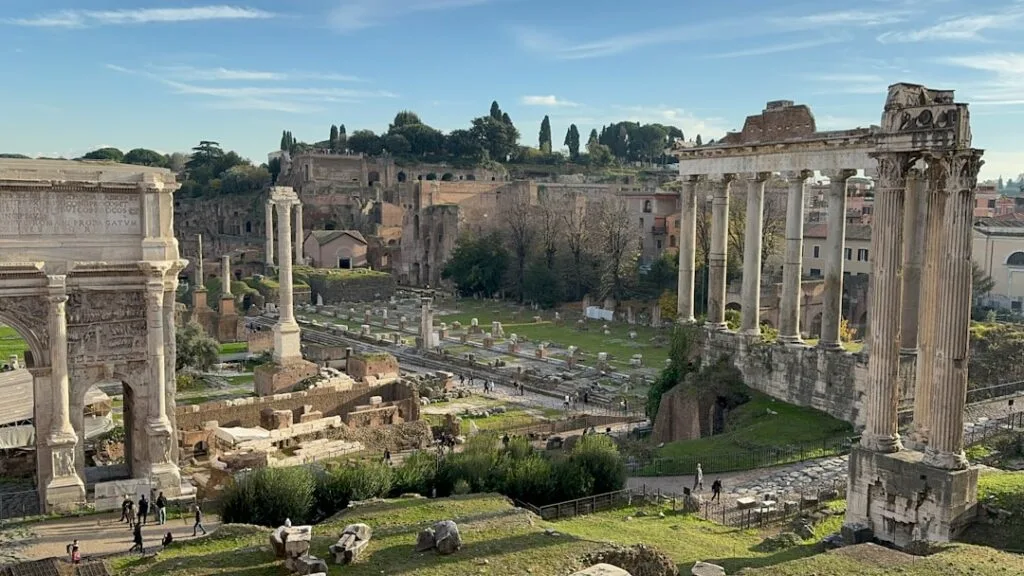
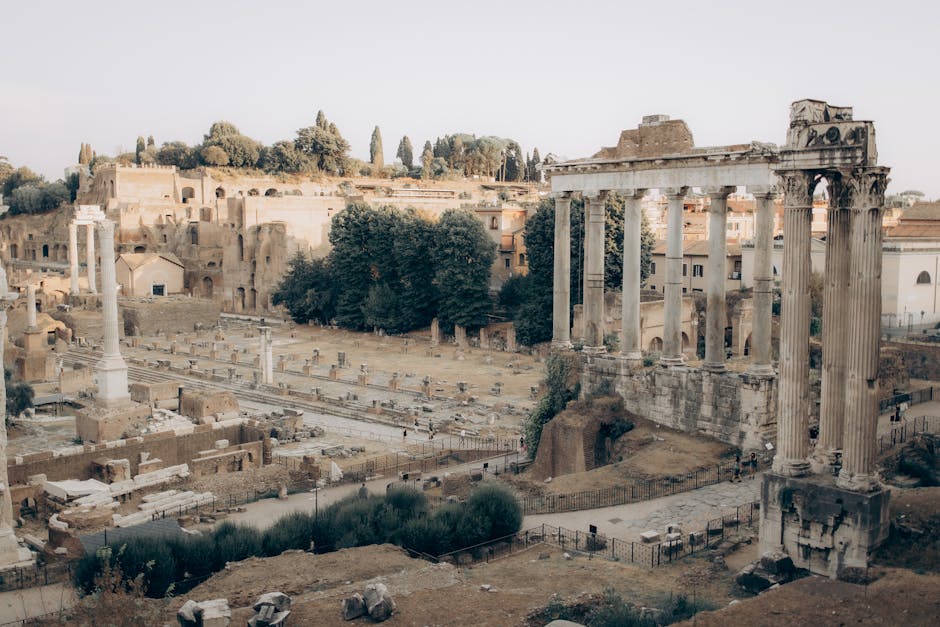
The Roman Forum, sitting at the heart of ancient Rome, is the narrative axis of this walk. Exact address: Foro Romano, Via della Salara Vecchia, 5/6, 00186 Roma RM, Italia. Entry is usually via the main entrance near the Colosseum or from Via dei Fori Imperiali. Price: combined Colosseum/Forum/Palatine ticket — standard adult fare about €18 (often including €2 reservation fee), reduced rate for EU citizens aged 18–25 around €2, free for under‑18s. Hours: typically open from 08:30 until about one hour before sunset; in high season (April–August) hours may extend to 19:00. Always check the official site for confirmation.
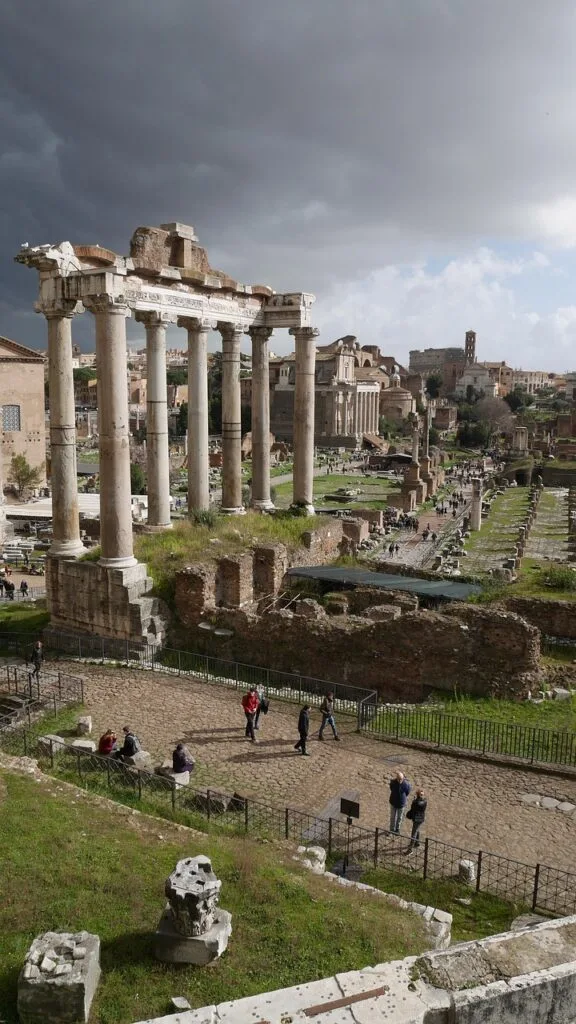
When you enter the Forum, take a moment to breathe and take in the scope of the ruins. You’ll see the Curia Julia (Curia Iulia), the ancient Senate house; the Arch of Titus (Arco di Tito) to the east; and the Via Sacra, the main road that ran through triumphal processions. The topography is complex: differing levels reflect successive reconstructions, sediment deposits and restorations. Informational panels are numerous, but it’s helpful to carry a small map or use an offline map app to locate the Temple of Saturn (Tempio di Saturno) and the Basilica of Maxentius (Basilica di Massenzio).
Practical tips:
- Time: aim for opening time (08:30) to avoid crowds; morning light is ideal for photos.
- Tickets: buy the combined Colosseum/Forum/Palatine ticket online to secure a precise time slot at the Colosseum. Many tickets are valid for 24–48 hours across the three sites.
- Gear: comfortable shoes, water and a hat in summer. Surfaces are uneven and can be slippery when wet.
- Audio guide: available on site or via apps; useful for untangling the complex layers of ruins.
Click here to book a combined Colosseum, Forum and Palatine ticket
2. Palatine Hill — the emperors’ hill, private remnants and viewpoints
The Palatine Hill (Colle Palatino) is an almost inevitable stop as you climb up from the Forum toward the Colosseum. Address: Colle Palatino, Via di San Gregorio, 30, 00186 Roma RM, Italia (access via the Forum/Palatine site). The Palatine hosts imperial palaces, terraces, gardens and outstanding viewpoints over the Forum and the valley of the Imperial Forums. Price: included in the combined Colosseum/Forum/Palatine ticket (around €18 standard adult). Hours: same window as the Forum, generally 08:30 until about one hour before sunset, with seasonal variations.
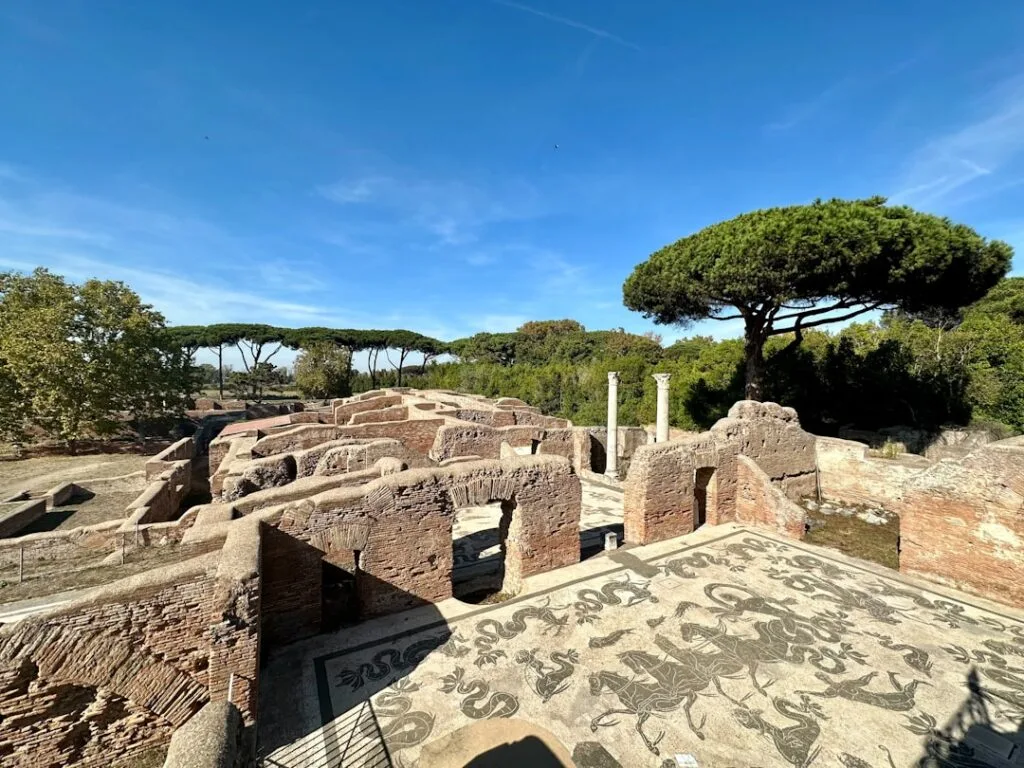
The Palatine is lighter on explanatory panels than the Forum but rich in remains of private structures: the Domus Augustana, Domus Flavia and the House of Livia. These buildings reveal details of imperial daily life and luxury through mosaics, fresco fragments and architectural spaces. The site also offers some of the best panoramas toward the Forum Valley and the Colosseum; take time to reach the viewpoints to capture both Rome’s rooftops and the broad sprawl of the Forum ruins.
Local tips:
- Plan: archaeology fans should allow at least 60–90 minutes on the Palatine to explore the main complexes.
- Photography: evening light (golden hour) flatters stucco and stone; mornings are quieter.
- Access: some Palatine areas may be closed for conservation—observe signage and respect restricted zones to protect mosaics.
- Facilities: toilets and services near the main entrance; limited refreshment options on site.
3. Imperial Fora and Via dei Fori Imperiali — monumental alignments and the imperial story
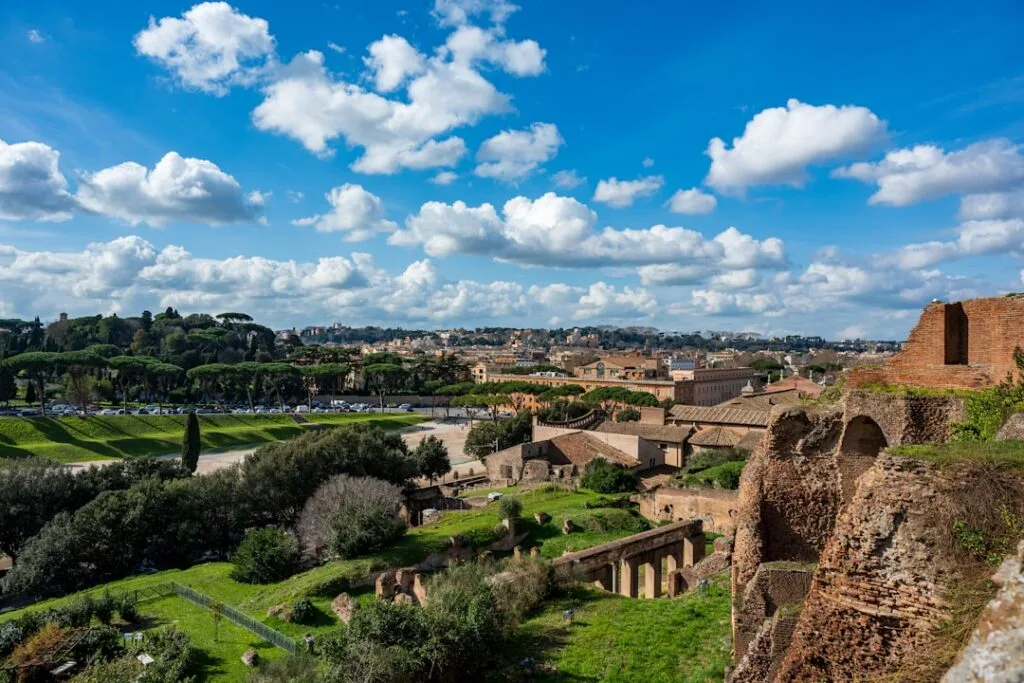
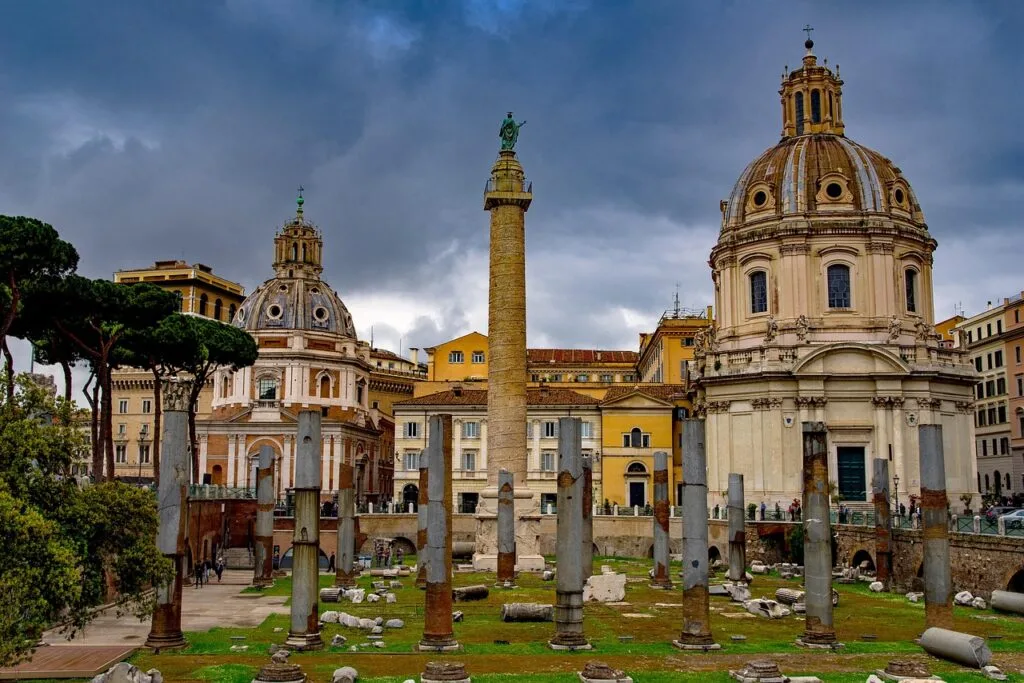
Heading down toward Via dei Fori Imperiali you cross the Imperial Fora (Fori Imperiali), a series of public spaces built by emperors from the 1st century BC onward. Via dei Fori Imperiali address: Via dei Fori Imperiali, 00186 Roma RM, Italia. This modern avenue creates a linear reading of aligned arches, columns and temples—most notably Trajan’s Forum (Foro di Traiano) with its famous Column of Trajan (Colonna Traiana). Although the avenue itself dates to the 20th century, it connects monuments that tell the administrative and architectural expansion of the Roman Empire.
Trajan’s Forum is accessible from the pedestrian area and offers remarkable remains as well as the Museo dei Fori Imperiali nearby. Price: outdoor areas are free to visit; certain museum spaces and temporary exhibitions around the Fora may require a separate ticket (around €8–€12 depending on the exhibition). Hours: variable—the open promenade is accessible 24/7 but museums follow regular hours (often 09:30–19:30 for exhibitions).
Via dei Fori Imperiali is great for wide‑angle photography: Trajan’s Column, the Arch of Septimius Severus (Arco di Settimio Severo) and the Capitoline skyline create a densely packed panorama. Tourist traffic can be heavy here; for a more contemplative experience, slip into neighboring side streets and small squares (piazzette) for less busy perspectives.
Practical tips:
- Time: allow 45–90 minutes to walk Via dei Fori Imperiali and visit one or two museum areas.
- Families: the site fascinates teenagers—bring maps and anecdotes to keep them engaged.
- Refreshments: bars and cafés around Piazza Venezia and along Via Cavour—expect tourist prices (an espresso around €1.50–€3.00, a panini €4–€8).
4. Final approach: the Colosseum (Colosseo) — entry, interior and visiting tips
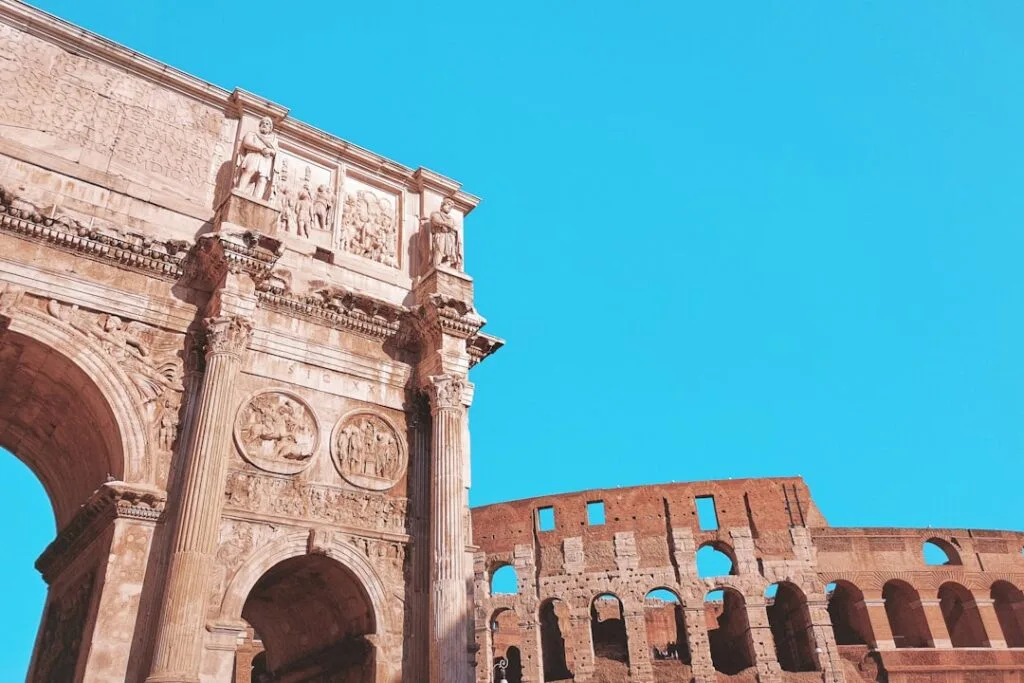
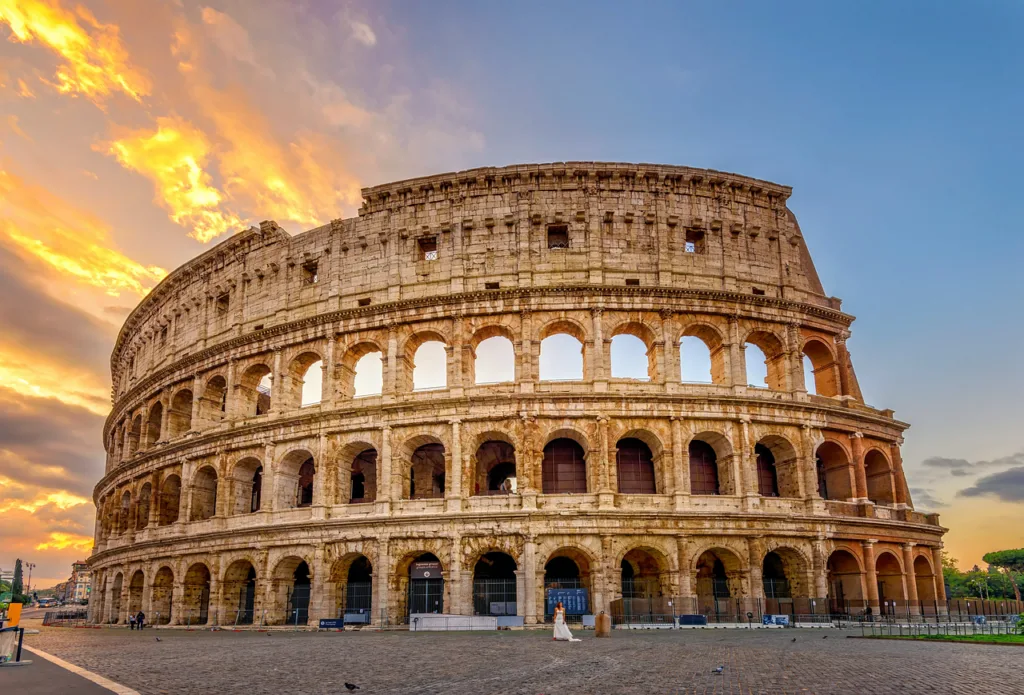
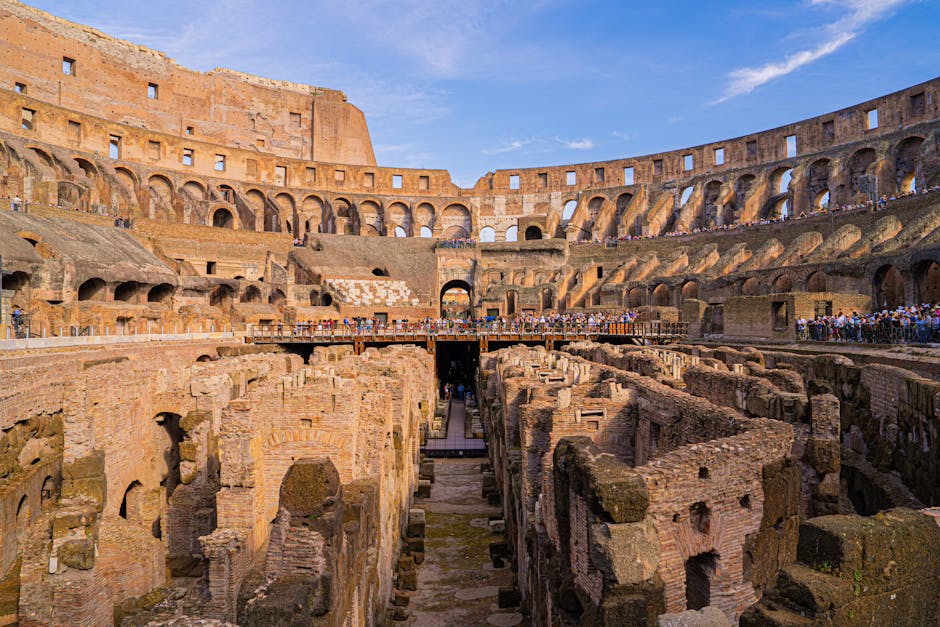
The highlight of the walk is, of course, the Colosseum. Exact address: Colosseo, Piazza del Colosseo, 1, 00184 Roma RM, Italia. Built under Vespasian and completed under Titus (late 1st century AD), the Colosseum is Rome’s most visited monument. Price: combined Colosseum/Forum/Palatine ticket — approximately €18 standard adult (often listed as €16 + €2 reservation fee); reduced fares and free admissions apply under European legislation. Special tours (access to intermediate levels, the hypogeum, night tours) vary in price from about €24 to €60 depending on the option and operator.
Hours: entry typically begins at 08:30 and the site closes about one hour before sunset; in high season you may be allowed in until 19:00. Last admissions are usually about 60 minutes before closing. Official online ticketing (www.coopculture.it or the Parco Archeologico del Colosseo platform) lets you reserve a specific time slot—essential in peak season.
Inside, the scale is overwhelming: the travertine outer ellipse, the inner vaults, the arena (partially reconstructed) and, if included, the hypogeum (the underground passages) reveal the technical network that supported the spectacles. The acoustics and sightlines are impressive, and understanding the tiers of seating (social divisions and reserved places) makes the political and social functions of the games clearer. Panels and audio guides supplement the visit with information on the monument’s dimensions and uses.
Tips to optimize your visit:
- Booking: reserve at least 48 hours in advance during high season; for special tours, early booking is mandatory.
- Security: security checks at the entrance—no bulky items; leave large bags at the hotel if possible.
- Best photo spots: for the classic shot, stand on Via dei Fori Imperiali facing the Colosseum, or climb Palatine Hill for a higher view.
- Duration: allow 1.5–2 hours for a full tour of the Colosseum and hypogeum (if included).
Click here to book a Colosseum underground and ancient Rome tour
Conclusion: experiencing ancient Rome step by step — final tips and extended routes
The walk from the Forum to the Colosseum is a dense experience, packed with stories and visual highlights. Walking along the Via Sacra, weaving through the fabric of the Roman Forum, climbing the Palatine, following Via dei Fori Imperiali and approaching the Colosseum, you’ll have traversed millennia in the span of a morning or afternoon. The exact addresses (Foro Romano, Via della Salara Vecchia, 5/6; Colle Palatino, Via di San Gregorio, 30; Colosseo, Piazza del Colosseo, 1) will help you orient yourself within the modern city that wraps these ruins. The prices listed (around €18 for the combined ticket, special options between €24 and €60) are guideposts—always check official sites for updates.
To extend your exploration, consider adding the Capitoline Museums (Musei Capitolini, Piazza del Campidoglio, 1, 00186 Roma RM — price around €15 / typical hours 09:30–19:30) to better understand imperial iconography, or wander to the Monti neighborhood for a coffee in medieval lanes. If you have more time, the Baths of Caracalla (Terme di Caracalla, Viale delle Terme di Caracalla, 52, 00153 Roma RM) offer another angle on ancient Rome’s public infrastructure.
Click here to book a private Capitoline Museums visit
Final local tips:
- Hydration: public fountains (nasoni) supply free drinking water—bring a reusable bottle.
- Safety: watch for pickpockets in busy tourist areas; keep valuables secure.
- Respect: don’t touch mosaics and obey barriers—conservation depends on visitors too.
- Quiet hours: early morning or late afternoon to avoid tour groups and enjoy more dramatic light.
Ultimately, this walk isn’t just a sightseeing route: it’s an open‑air immersion in urban archaeology. Take time to notice the details—inscription fragments, stone joints, weathered sculptures—that reveal the layers of a civilization. And above all, leave room for wonder: walking from the Forum to the Colosseum is walking through the heart of a living legend carved in Rome’s stones.