





Introduction: Stepping into the Mysteries of the Sistine Chapel
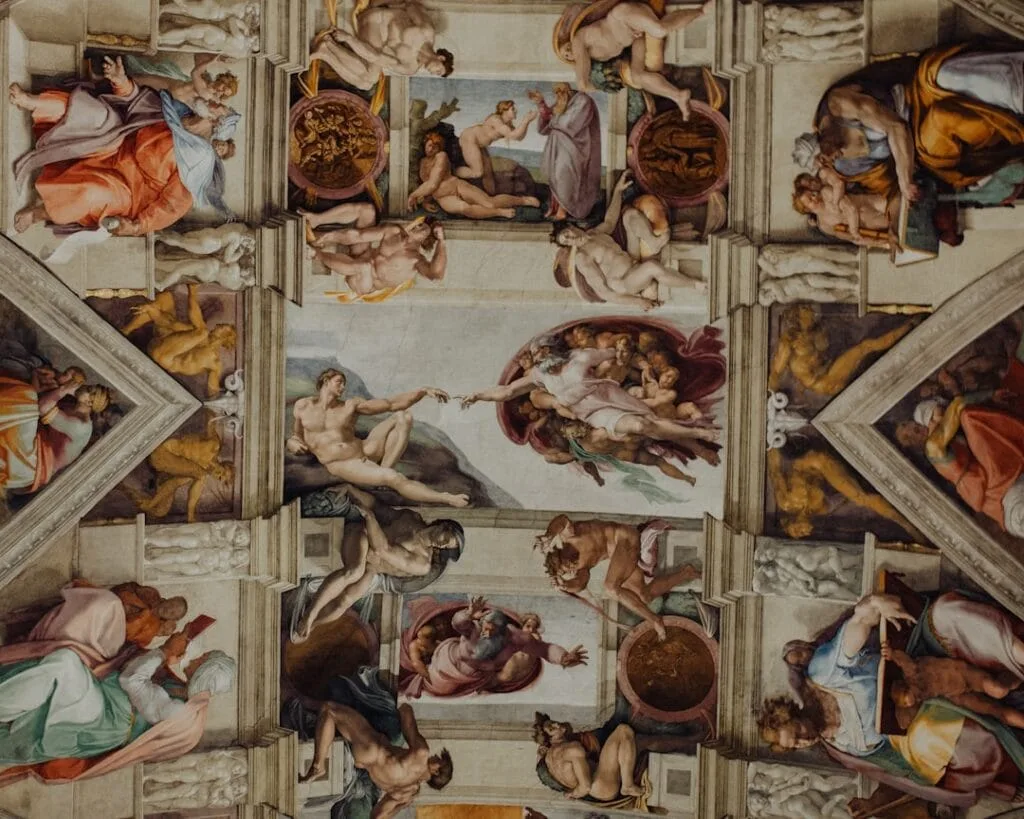
The Sistine Chapel, or Cappella Sistina in Italian, is arguably one of the most celebrated artistic sanctuaries in the world. Located inside the Vatican Museums, it sits at the heart of the Vatican City State yet welcomes millions of visitors each year from Rome and beyond. The Sistine Chapel is far more than a painted ceiling: it condenses history, artistic technique, theology and papal politics. Understanding its secrets means seeing Michelangelo’s hands, the gestures of the figures and the conservation choices that have allowed these frescoes to resist time in a whole new light.
The official entrance is at the Vatican Museums – Viale Vaticano, 00165 Roma RM, Italy. Once you pass through the museum doors you walk along galleries filled with sculptures, tapestries and masterpieces from many eras until you finally enter the chapel itself: a space that is at once sacred and functional, used for papal conclaves and major religious events. The paradox of the Sistine is that it is always meant for silent contemplation even though it was designed to convey a complex message to the people and the elite of its day.
In this article we’ll unveil aspects that are less obvious to a hurried visitor: fresco techniques, symbolic mappings hidden in the margins, restoration interventions and curatorial decisions that shape how we perceive the chapel today. We’ll also provide precise practical information — addresses, opening hours, ticket prices in euros — so you can prepare your visit without surprises. Finally, we’ll share a few lesser-known anecdotes, such as underdrawing traces beneath the paint (sinopie), the use of rare pigments like ultramarine, and how the chapel is used during a papal conclave.
 Click here to book your tickets for the Vatican Museums and the Sistine Chapel
History and Purpose: From Papal Chapel to Public Masterpiece
The Sistine Chapel was built between 1473 and 1481 under Pope Sixtus IV (Francesco della Rovere), from whom it takes its name. Its original purpose was liturgical and practical: to serve as the pope’s private chapel and the site for Vatican ceremonies. The precise address to access the complex is Vatican Museums, Viale Vaticano, 00165 Roma RM, Italy, and as you move through the galleries you will eventually reach the Cappella Sistina located within the museum route.
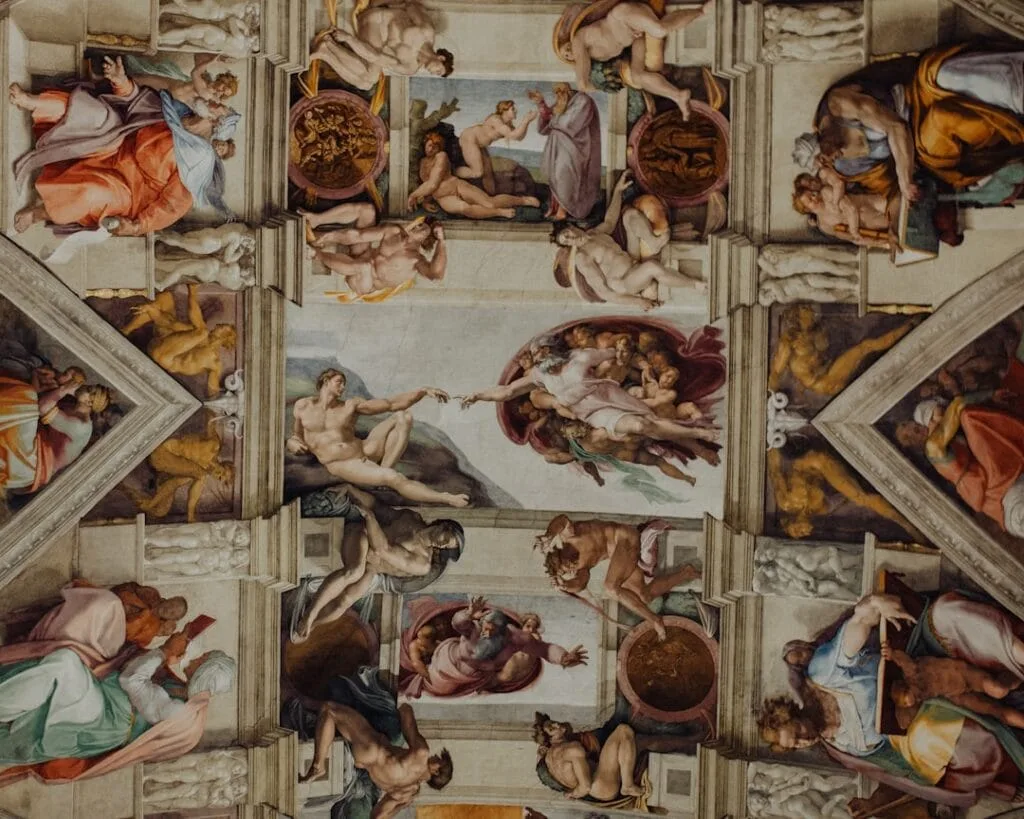
Over the centuries the chapel’s role expanded: it became the meeting place for cardinals during conclaves, a political backdrop to assert the Church’s preeminence, and an artistic showcase. It is here that pontiffs commissioned major works, notably the ceiling painted by Michelangelo Buonarroti between 1508 and 1512 and, later, the Last Judgment on the altar wall (1536–1541).
The chapel also follows a strictly codified layout: the arrangement of seating, liturgical orientation and natural lighting were all designed to reinforce symbolism. During a conclave the Sistine Chapel is transformed into a deliberation chamber; public access is suspended at that time. Decisions made within these walls have sometimes changed the course of the Church and of Europe, adding a political intensity to the site’s aura.
- Address: Cappella Sistina, inside the Vatican Museums, Viale Vaticano, 00165 Roma RM, Italy
- Function: Liturgical use, conclaves, artistic exhibition
- Access: only via the Vatican Museums
Click here to Book a private Vatican tour including the Sistine Chapel
Techniques and Materials: Insights into Michelangelo’s Mastery
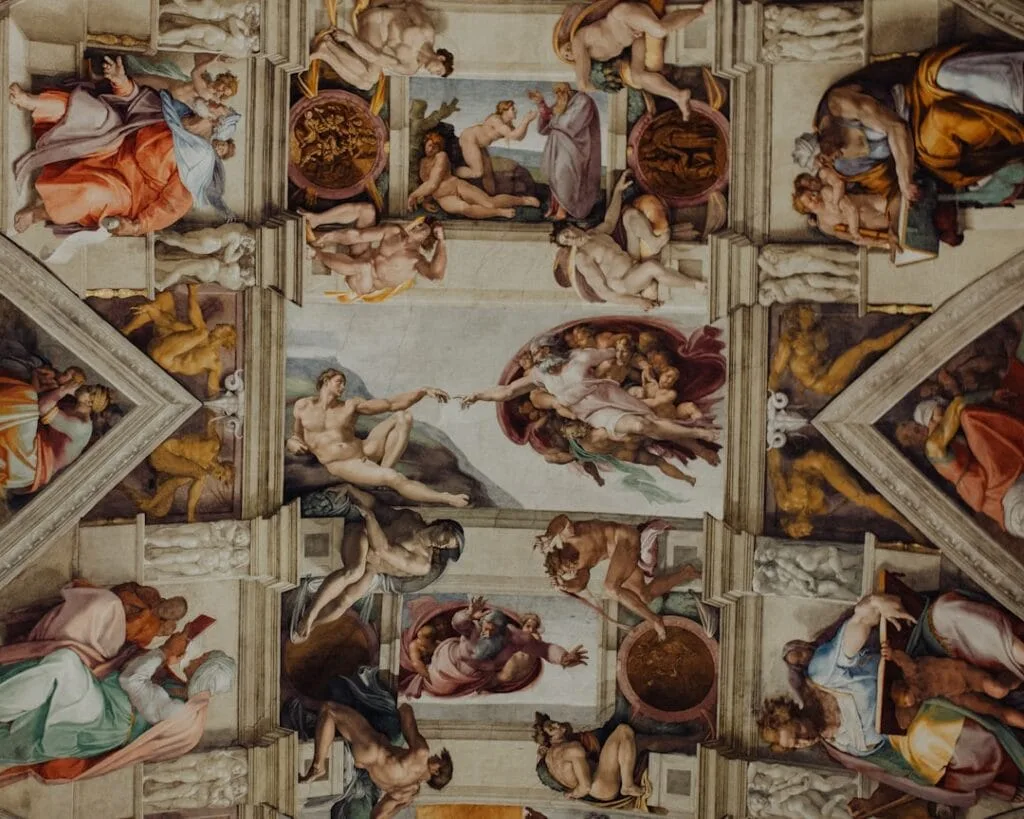
The Sistine Chapel is a masterclass in the buon fresco technique, where pigment is applied to fresh, wet plaster. This method demands speed and precision: each section of fresco corresponds to a day’s work (a “giornata”), and specialist eyes can sometimes spot the seams between days. The underdrawings, called “sinopie,” reveal sketches and changes visible through certain analyses and imaging techniques.
Michelangelo, who considered himself first and foremost a sculptor, had to learn these painting techniques and coordinate assistants. The use of costly pigments such as lapis lazuli-derived ultramarine on select areas carried both financial and symbolic weight: that intense blue was often reserved for divine figures or visually important zones. Traces of gold and glazing also show later interventions and touch-ups by other hands.
Modern scientific analyses (spectroscopy, X-rays, multispectral imaging) have uncovered changes in composition and variations in drawings. For instance, some figures were redesigned during preparatory phases, and anatomical details highlight Michelangelo’s advanced knowledge of the human body. You can also spot corrections, sometimes visible to the naked eye, where the artist altered an arm’s angle or a facial expression to heighten the dramatic message.
- Main technique: buon fresco (pigments on wet intonaco)
- Elements found: sinopie, giornata seams, use of ultramarine
- Analyses: multispectral imaging and radiography to reveal underdrawings
Hidden Symbolism: Theological and Political Readings
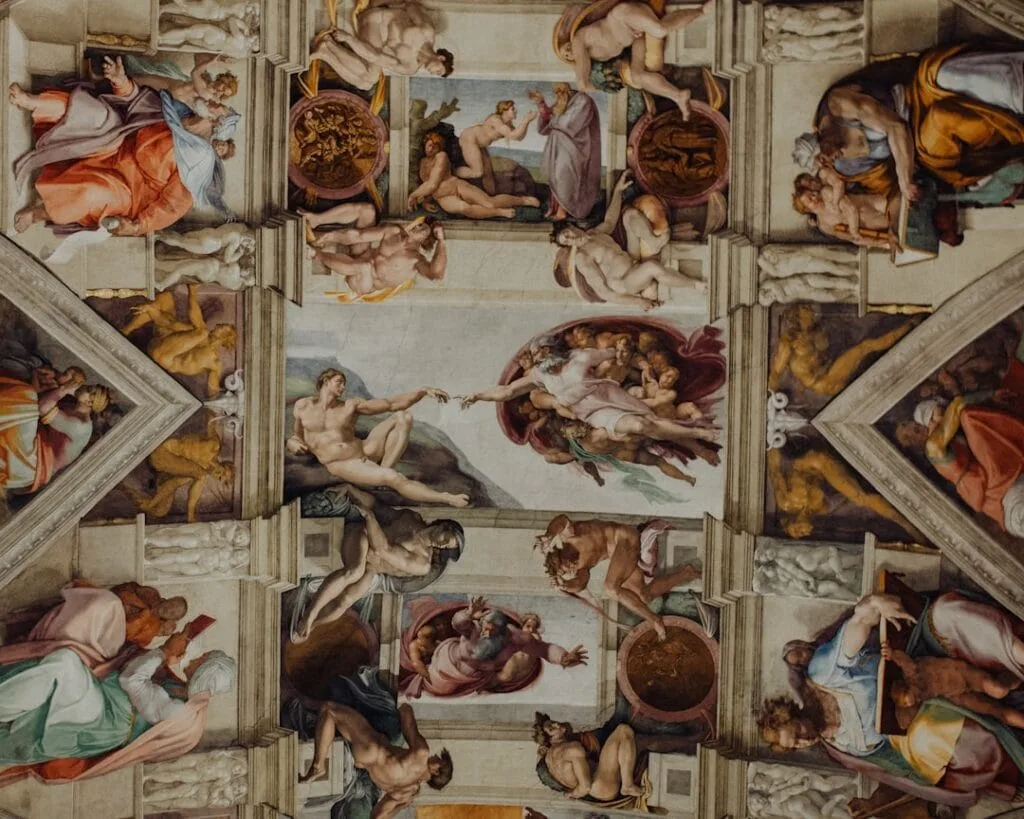
The iconographic richness of the Sistine Chapel often goes beyond the first glance. Michelangelo and his patrons embedded multiple layers of meaning: narrative, theological, allegorical and political. The ceiling, for example, arranges biblical scenes (from Creation to the Fall) into a visual theology about salvation and the human condition.
In the margins and beneath the surface of the frescoes are allegorical figures, prophets and pagan sibyls integrated into a Christian discourse. Certain details — specific gestures or anachronistic attributes — have been interpreted as criticisms, praises or commentary on Michelangelo’s era. Some art historians even suggest that the faces of certain figures resemble contemporaries or spiritual personalities, a common Renaissance practice for conveying discreet messages.
Moreover, the chapel served as a diplomatic tool: the images reinforced the authority of the pope and the Church in the face of secular powers. The Last Judgment, for example, was perceived as a moral and political warning. Hidden mathematical and geometric symbols within the composition refer to humanist systems of thought, where harmonious proportions express the cosmic order willed by God.
- Main themes: Creation, Fall, Redemption
- Notable figures: Prophets, Sibyls, Patriarchs
- Possible readings: theological, political, humanist
Restorations and Conservation: How the Sistine Regained Its Colors
The most famous restoration of the Sistine Chapel took place between 1980 and 1994. Led by the team at the Vatican Museums, the project was controversial: it removed layers of grime, varnish and later overpaint built up over the centuries, revealing colors far more vivid than the public had grown used to. The costs, methods and interpretations sparked international debate among experts.
Conservators used carefully selected solvents, gels and non-invasive tools to remove foreign layers without harming the original paint. They also implemented environmental controls: air filtration, humidity and temperature regulation, and limits on visitor numbers to reduce CO2 and particulate impact. Today, non-heating LED lighting and visual barriers protect the paintings while allowing optimal viewing.
Visiting the chapel today means seeing the result of combined science and artistry. Practical information related to this conservation is managed by the Vatican Museums, whose main entrance is at Viale Vaticano, 00165 Roma RM, Italy. Specialized guided tours sometimes include explanations of these conservation efforts and typically cost between €60 and €90 depending on duration and guide quality.
- Major restoration: 1980–1994
- Conservation measures: air filtration, T/H control, LED lighting
- Specialized guided tours: €60–90 (estimate)
Click here to book a guided tour of the Vatican Museums, the Sistine Chapel and St. Peter’s
Practical Info: Hours, Prices and Tips for a Smooth Visit
To plan your visit, here are the practical, up-to-date details:
- Access address: Vatican Museums – Viale Vaticano, 00165 Roma RM, Italy (main entrance)
- Alternative address / Basilica: Basilica di San Pietro in Vaticano, Piazza San Pietro, 00120 Città del Vaticano
- Vatican Museums opening hours: generally Monday to Saturday from 09:00 to 18:00 (last entry at 16:00). Closed on Sundays except the last Sunday of the month when the museums are open from 09:00 to 14:00 with last entry at 12:30 (free entry that day).
- St. Peter’s Basilica hours: generally from 07:00 to 19:00 (April–September) and from 07:00 to 18:30 (October–March), subject to change for papal ceremonies.
- Prices: standard ticket for the Vatican Museums including the Sistine Chapel: €17 (full price). Online reservation fee: around €4. Reduced rate (European youth 18–25 years): €8. Free for children under 6.
- Guided tours: typically between €60 and €90 depending on duration and guide; private/night tours cost more.
Practical tips:
- Book tickets online on the official Vatican Museums website (www.museivaticani.va) to avoid very long lines.
- Arrive early in the morning or later in the day (depending on opening times) for a less crowded experience.
- Respect the silence and the strict no-photography rule inside the Sistine Chapel: photos are banned to protect the artwork and the devotion of worshippers.
- Bring modest clothing if you plan to visit the Basilica: knees and shoulders must be covered.
Click here to book skip-the-line tickets for the Vatican
Conclusion: The Sistine Chapel, Between Mystery and Accessibility
The Sistine Chapel remains a uniquely emotional and intellectual experience. Between Michelangelo’s vaulted paintings, major restorations and hidden iconographic secrets, each visit reveals another layer of meaning. Practical details — Vatican Museums, Viale Vaticano, 00165 Roma RM, Italy, opening hours, ticket prices in euros — help you prepare a respectful and informed visit.
Beyond mere aesthetic admiration, understanding fresco techniques, symbolism and conservation challenges greatly enriches the encounter with these images. Whether you are an art lover, history buff or pilgrim, the Sistine Chapel imposes a kind of silence that invites reflection. The secrets we’ve outlined let you approach the chapel not just as a frozen masterpiece but as a living object, transformed by time, science and human care.
One final practical tip: plan your visit carefully, follow the conservation rules in place, and make time to explore the complementary spaces of the Vatican Museums and St. Peter’s Basilica to extend the experience. Meeting the Sistine is a rendezvous with history, faith and human virtuosity — a meeting worth preparing for and savoring.
Click here to Reserve your guided visit of St Peter’s Basilica and dome