





Introduction
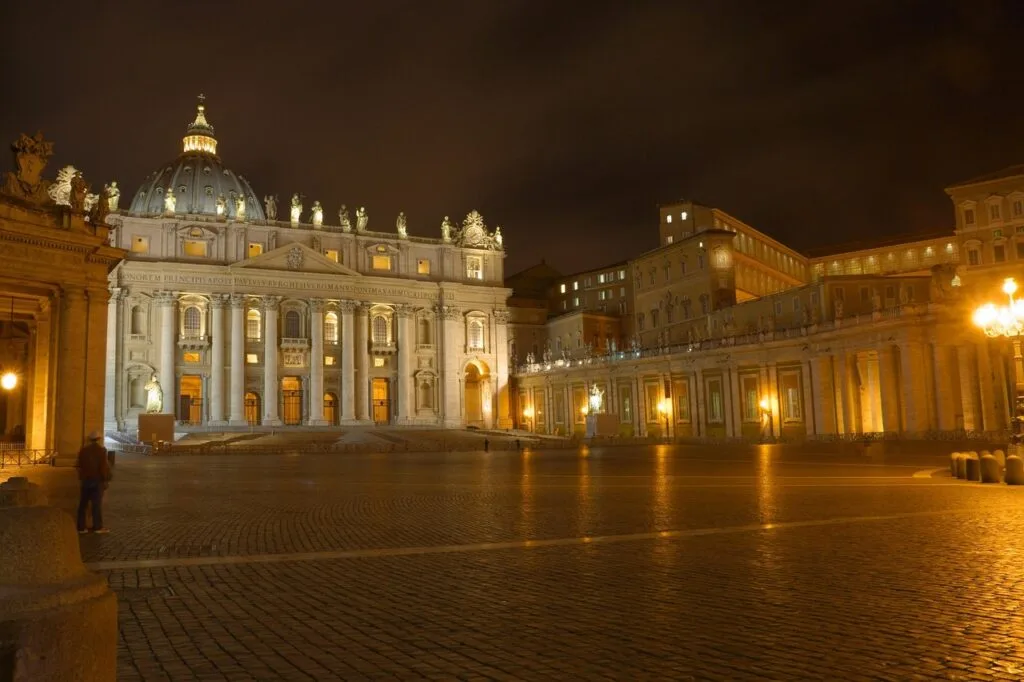
St. Peter’s Square (Piazza San Pietro) in Rome is more than a public plaza: it’s an architectural stage, a sacred theatre designed to host faith, power, and the crowd. Facing the monumental façade of St. Peter’s Basilica (Basilica di San Pietro in Vaticano), the square is the culmination of a sequence of urban gestures linking ancient Rome to the modern Vatican. Its layout, undulating colonnades and central obelisk tell centuries of political, artistic and religious stories, while delivering strong sensory experiences — from sun-warmed travertine to the deep shadows under the porticoes.
Created in the 17th century by Gian Lorenzo Bernini, the square answered a twin need: to provide a forecourt capable of holding vast crowds and to present a welcoming image of the Catholic Church after the storms of the Counter-Reformation. The result is a carefully planned composition where scale, perspective and religious symbolism combine to produce effects that are as practical as they are theatrical. As a travel writer my aim here is to peel back those layers for you: to explain not only the « what » but the « how » and the « why » behind the architectural choices that make St. Peter’s Square a baroque urban masterpiece.
This article offers a detailed exploration: from the origins of the urban plan to the secrets hidden beneath the basilica, from material choices and decorative elements to the strategies designed to control and elevate the visitor’s gaze. You’ll also find essential practical information to prepare your visit: exact addresses, ticket prices in euros, opening hours, tips to avoid queues, and recommendations for photographing the most iconic perspectives.
Whether you’re a curious traveler, an art history student, or just an architecture enthusiast, St. Peter’s Square reveals itself differently depending on the time of day, the light, the season and the liturgical calendar. Stone, faith, politics and spectacle mingle here — and every element was conceived to reinforce a very specific collective experience. Join me in uncovering the architectural secrets of St. Peter’s Square, where every column, statue and line of perspective has a story to tell.

History and urban planning: from ancient Rome to Bernini’s plan
St. Peter’s Square, located at Piazza San Pietro, 00120 Città del Vaticano, is the result of a long evolution that began long before the 17th century. Originally, the early basilica built by Constantine in the 4th century on the site of the necropolis where the apostle Peter was believed to be buried opened onto a simple forecourt. Over the centuries, the rise in pilgrimages, the consolidation of papal power and the desire to make Rome’s religious centrality visible led to the creation of much larger public spaces.
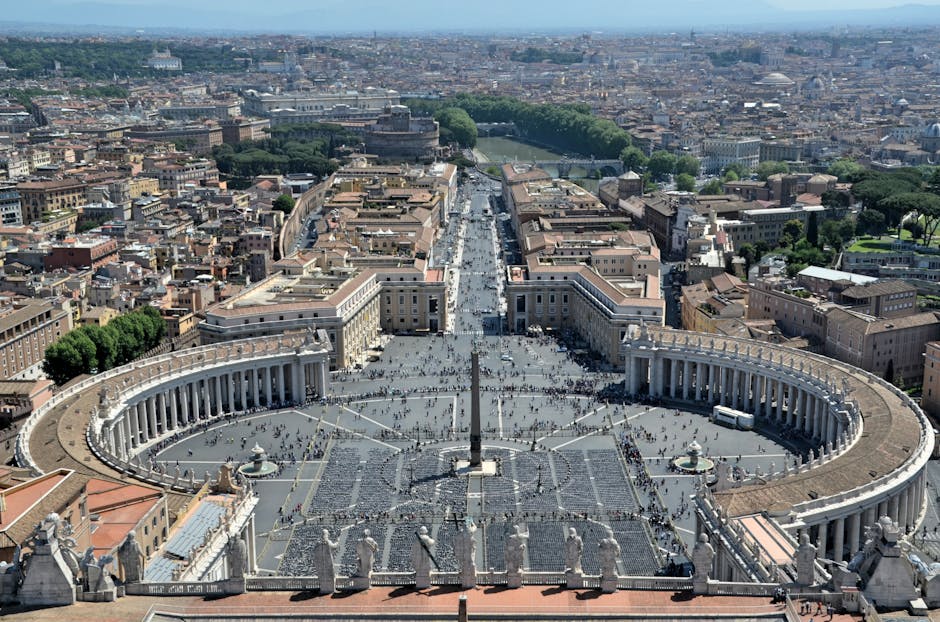
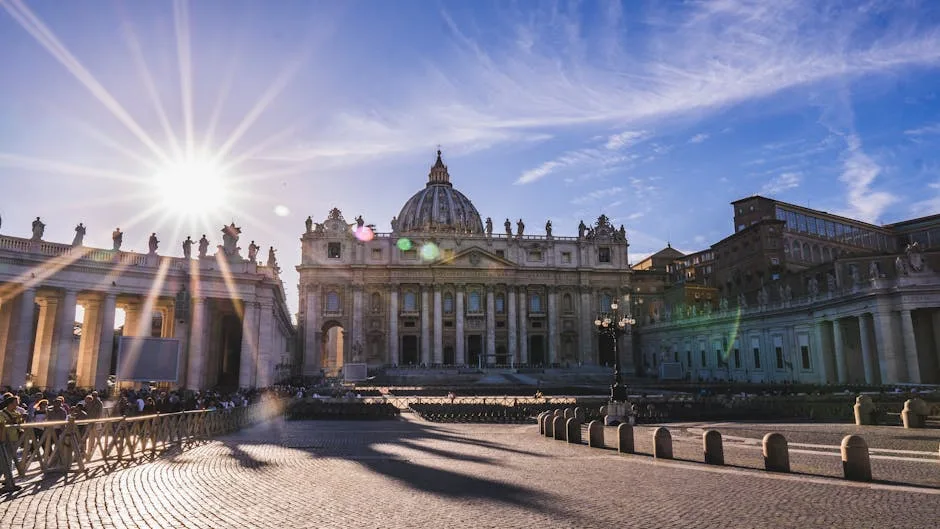
In the 17th century, under the pontificate of Alexander VII (1655–1667), the commission for the square was entrusted to Gian Lorenzo Bernini (1598–1680). Bernini faced a major challenge: to create a welcoming forecourt capable of holding tens of thousands of faithful during solemn events (blessings, consistories, jubilees). His solution was bold and elegant: to design an architectural « embrace » — the famous hemicycle colonnade — that clasps the square as if to welcome the faithful. The elliptical arrangement, punctuated by 284 Tuscan columns set in four rows, creates precise optical effects: seen from the center, the columns appear to form a single continuous portico, while from the basilica the square unfolds into a monumental perspective.

The Egyptian obelisk, erected at the center of the square, plays a structuring role: moved into place in 1586 by architect Domenico Fontana on the orders of Pope Sixtus V, it became the central axis, the focal point around which Bernini organized the square’s geometry. Choosing an ancient artifact was deliberate: it inscribes the square into Rome’s continuity and links papal power to the endurance of the Empire. Standing about 25.5 meters tall (41 meters including its pedestal), the obelisk is flanked by two fountains — Bernini’s fountain (1675) and Maderno’s fountain (1614) — whose jets punctuate the composition and provide a human scale against the monumentality.

Finally, the orientation of the square and its approaches were designed to control visitor flow. The porticoes hide the extremities, focusing attention on the basilica façade and the papal balcony. In this way, the urban choices made in the 17th century were not purely aesthetic: they were part of a strategy to stage power and mediate between the sacred and the profane.
 Click here to Book a guided visit to St. Peter’s Basilica
Bernini’s colonnade and the statues: a theology in marble
Bernini’s colonnade is the clearest example of architecture used as symbolic language. Composed of 284 Tuscan columns, it sweeps across two opposing semicircles, forming an open theater. The intended effect was a maternal embrace: Bernini himself said he wanted « to create two arms ready to gather the whole Christian people within their folds. » The alignment of the columns, punctuated by entablatures and calculated intercolumniations, creates changing plays of light and shadow over the course of the day — a must-see for any photographer or attentive observer.
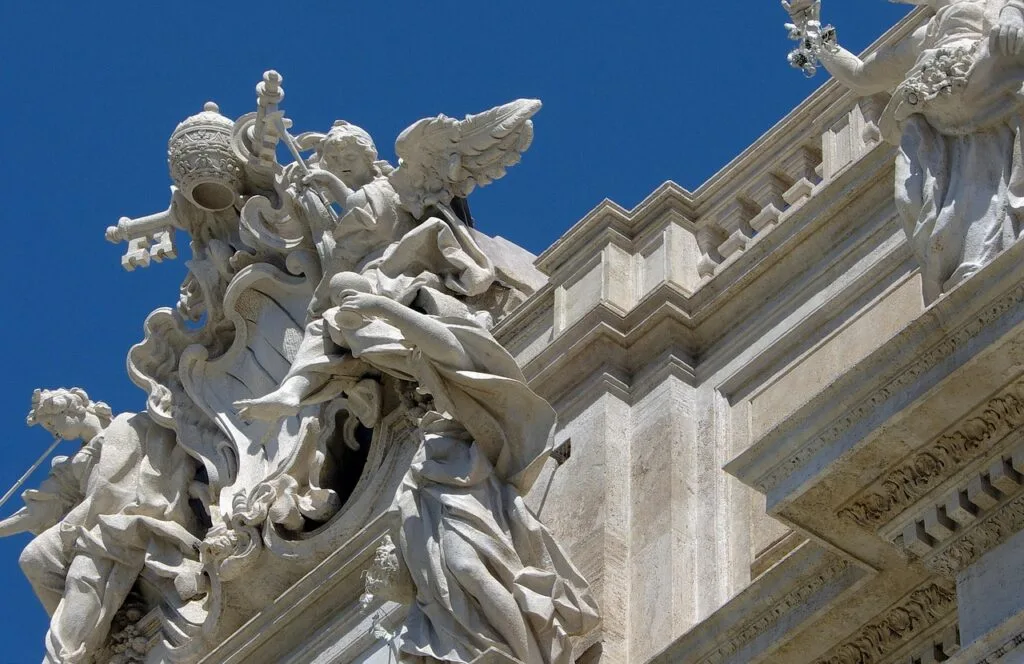
Above the colonnade, 140 statues of saints sculpted by various artists crown the top. Each figure, often larger than life, is placed to be legible from the square and to create a line of sight that crowns the space. Among them are representations like Saint Peter and Saint Paul (although the dominant statues of these two apostles are also found atop the basilica façade). These statues participate in a visual liturgy: they educate the pilgrim’s gaze by reminding, stone by stone, of the succession of saints and martyrs.
Materiality is also key: the travertine used for the columns comes from Roman quarries, chosen for its durability and warm color. The polished marble of the statues contrasts with the rougher travertine, producing a tactile palette appreciated when you look up — an experience often missed when visitors are content simply to photograph the façade.

From a technical point of view, Bernini had to solve engineering constraints: distributing loads across long spans, ensuring the stability of high-mounted statues, and integrating access staircases and circulation logic. The colonnade also includes a succession of niches that serve as shelter for processions and waiting points on high-attendance days. Understanding these details sheds light on how architecture became a tool for crowd management while maintaining remarkable aesthetic effectiveness.
St. Peter’s Basilica, the dome and hidden treasures
St. Peter’s Basilica (Basilica di San Pietro in Vaticano), whose official address is Piazza San Pietro, 00120 Città del Vaticano, is open to the public according to seasonal hours: typically from 07:00 to 19:00 from April to September and 07:00 to 18:30 from October to March. Entrance to the basilica is free, but some specific accesses are paid (see below). Security checks are in place during opening hours; allow between 15 and 45 minutes in high season.
Click here to book the dome climb and the tombs tour
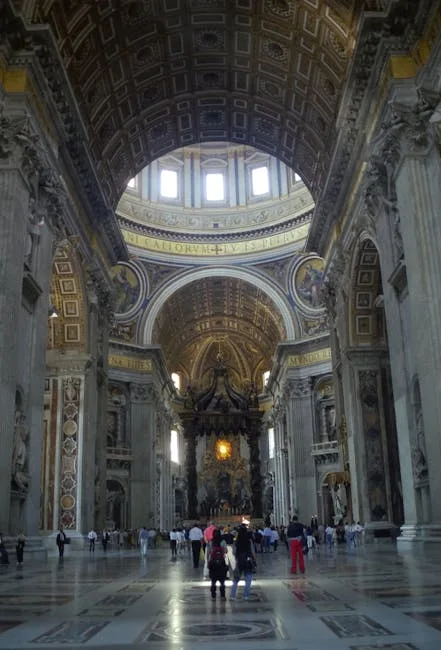
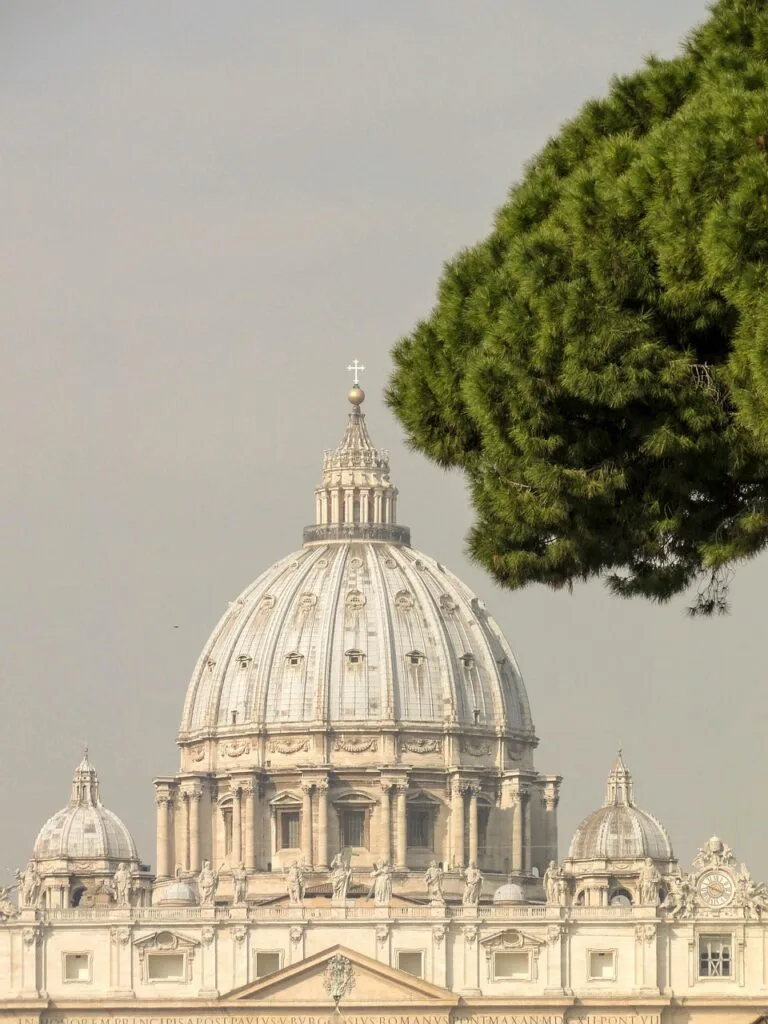
The dome, begun by Michelangelo and completed by his successors, is central to understanding the building’s architecture. It reaches about 136.57 meters to the top of the cross, offering a spectacular view over the square. Access to the dome can be done in two ways: climbing on foot (approx. 551 steps) or taking a partial elevator followed by roughly a hundred steps. Indicative prices (subject to change): around €8 for stair-only access, €10 for the partial elevator + steps. Dome opening times are often 08:00–18:00 (seasonal variations). These details are available at the information point at the basilica entrance.
Another lesser-known secret is the Vatican necropolis and the Scavi (excavations) beneath the basilica, where you can visit the site believed to be Saint Peter’s tomb. Visits are strictly limited and must be booked in advance via the Ufficio Scavi (Vatican Excavations). Reservation address: Domus Sanctae Marthae, 00120 Città del Vaticano or via the official Vatican online form. The approximate price for a guided Scavi tour is €13, but availability is extremely limited and requires booking several weeks in advance.

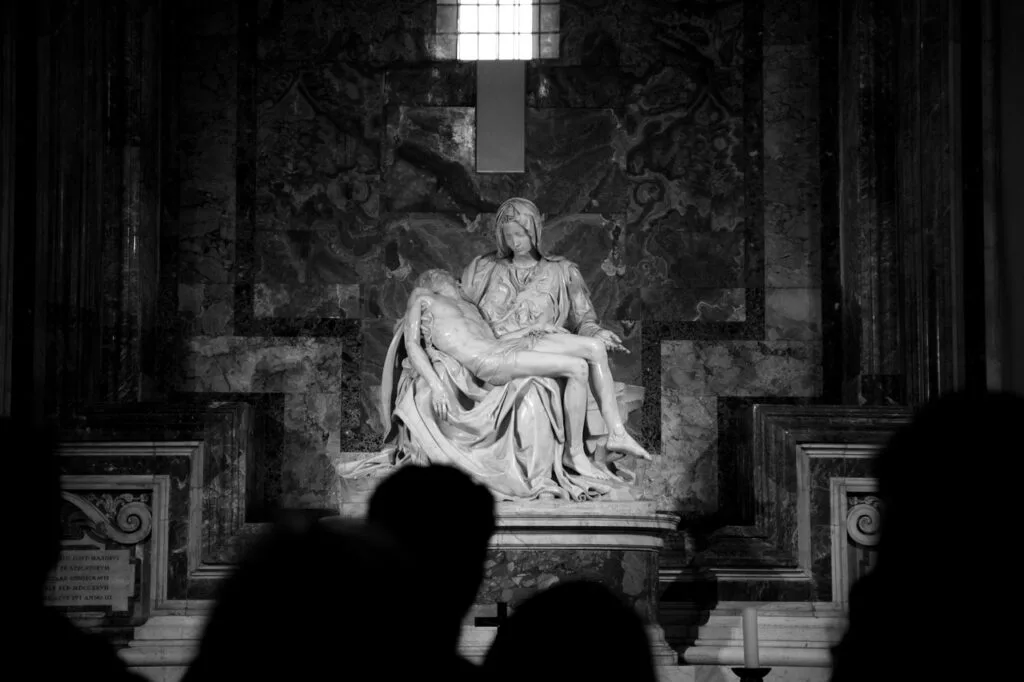
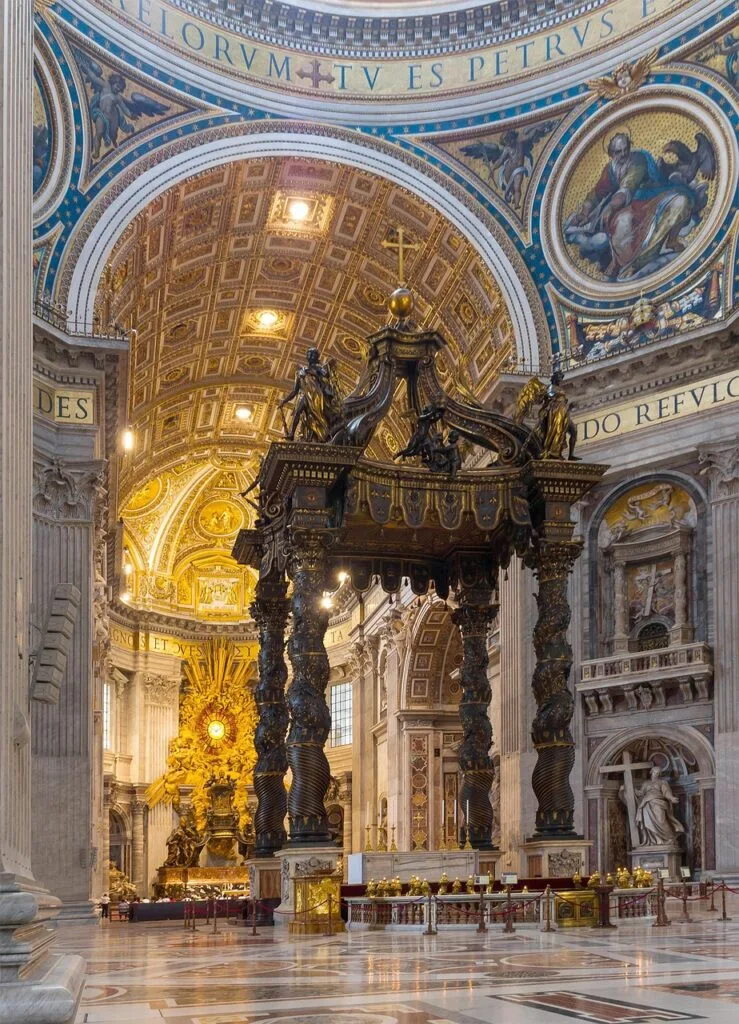
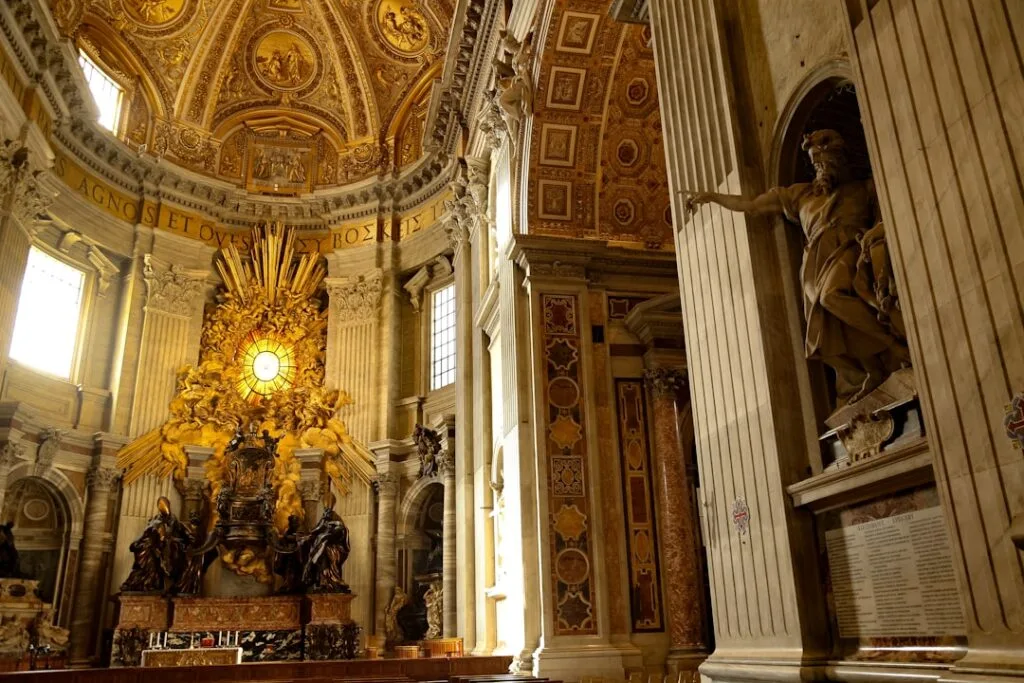
Inside, the basilica is full of masterpieces: Michelangelo’s Pietà (located in the first chapel on the right as you enter), Bernini’s monumental bronze baldachin (Baldacchino by Gian Lorenzo Bernini) above the high altar, and the colossal statue of Saint Peter. Each element responds to a precise iconographic program: light filtered through windows and lanterns highlights sculpted and gilded elements, while the Byzantine mosaics in the domes narrate gospel episodes. Art lovers should allow at least 1.5–2 hours for a careful visit, more if you climb the dome or visit the Vatican Museums nearby.
Practical tips for your visit: hours, tickets and local hacks
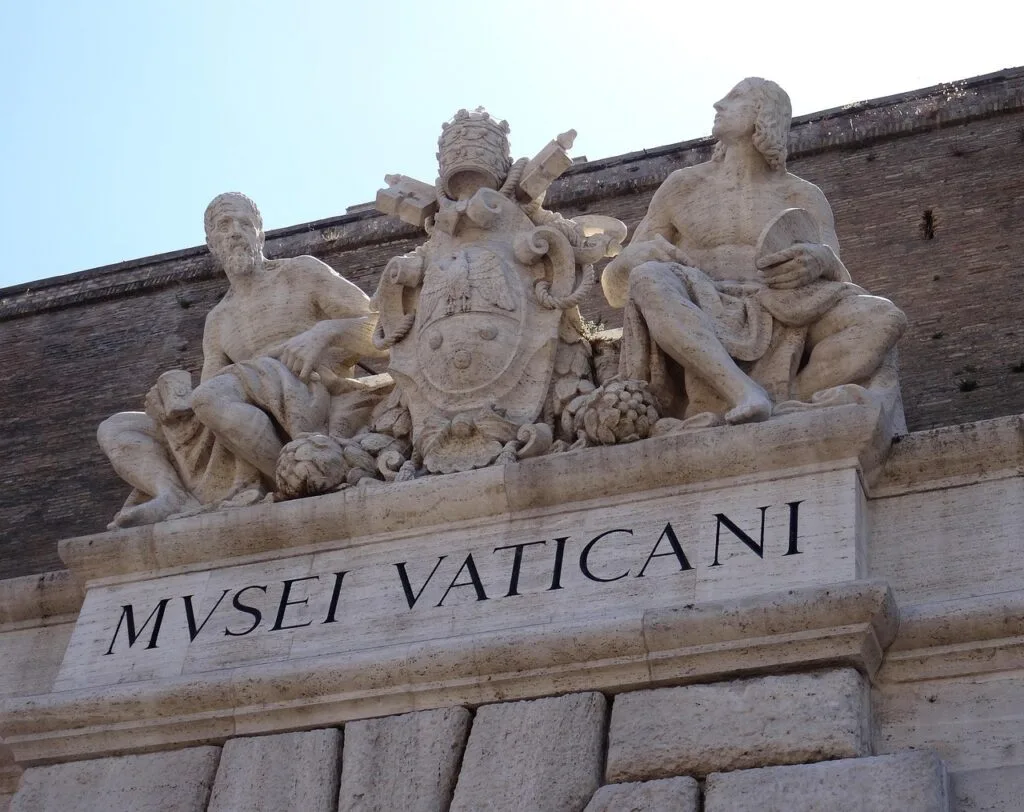
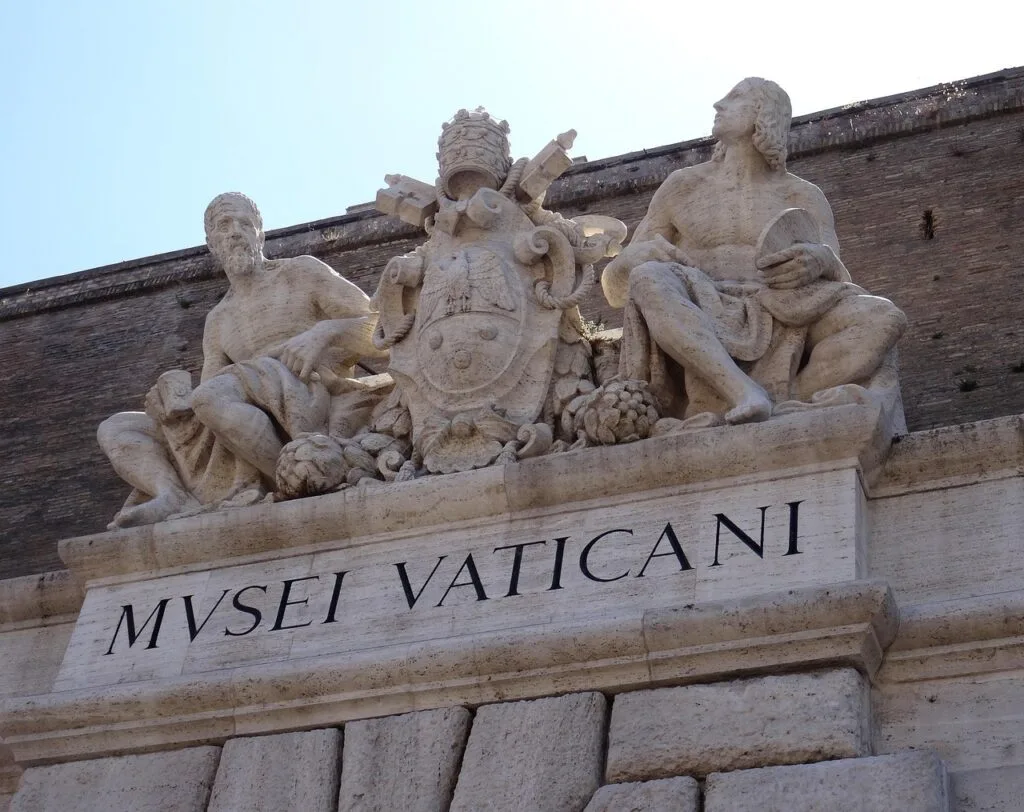
Getting ready for a successful visit to St. Peter’s Square and the basilica involves a few practical rules. Main address to keep in mind: Piazza San Pietro, 00120 Città del Vaticano. To visit the Vatican Museums, the address is Viale Vaticano, 00165 Roma RM. Vatican Museums opening hours: generally 09:00–18:00 (last entry 16:00), closed on Sundays except the last Sunday of the month (free entry that day — expect lines). Indicative adult price: €17 + €4 online booking fee = €21. Skip-the-line tickets are recommended in high season.
Click here to book skip-the-line tickets for the Vatican Museums
Practical advice:
- Security and checks: Expect a security screening (similar to airport security) at the entrance to the basilica and museums. Avoid large bags and allow extra time.
- Dress code: Appropriate attire is required to enter the basilica — shoulders and knees must be covered. Bring a light shawl if needed.
- Papal Audience: Wednesday papal audiences are often held in the square. Entry is free but good spots require arriving very early. Check the official Vatican site for free tickets and procedures.
- Photography: Flash photography is generally allowed in most spaces without flash, except in certain chapels or temporary exhibitions. Respect marked off areas and the quiet of worshippers.
- Best time to visit: For a more meditative atmosphere and fewer crowds, aim for early morning (07:00–09:00) or late afternoon. Sunrise provides exceptional light on the façade and square.
Transport and access:
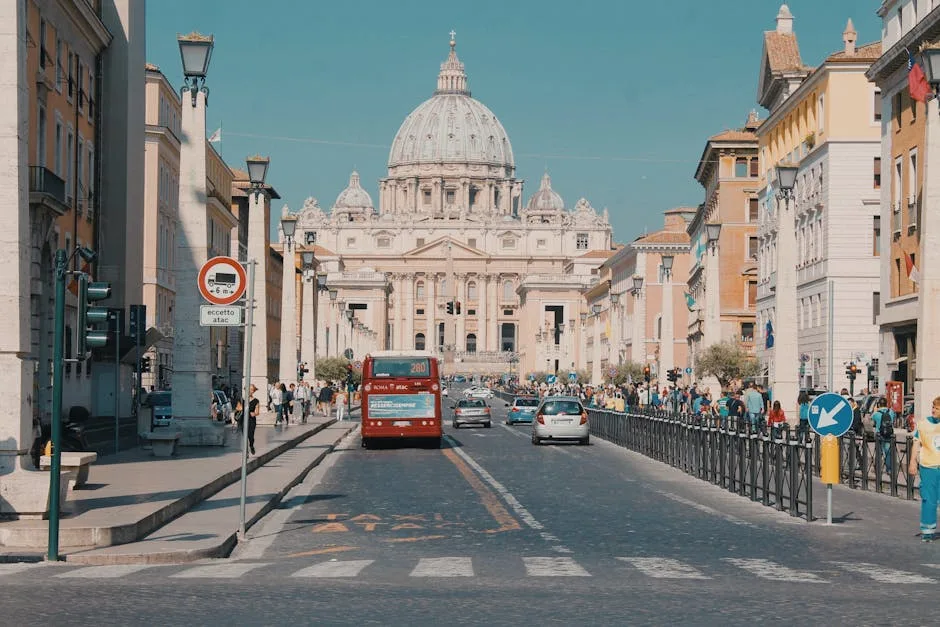
- By metro: Line A, station Ottaviano – San Pietro – Musei Vaticani (Via Ottaviano 110), about a 10–15 minute walk to the square.
- By bus: Several lines serve the Vatican area (e.g. lines 49, 32, 81 depending on direction). Check stops near Via della Conciliazione.
- By taxi: Say « Piazza San Pietro, Città del Vaticano » as your destination; expect traffic at peak times or during ceremonies.
Additional fees and services:
- Dome access: approximately €8–€10 depending on option (stairs / partial elevator).
- Scavi visit: approximately €13, reservation mandatory (Ufficio Scavi) — check the official Vatican site for details.
- Guided tours of the Vatican Museums and Sistine Chapel: prices vary by operator, often between €35 and €60 for a guided group tour including skip-the-line access.
Conclusion
St. Peter’s Square is an assembly of intentions, techniques and symbols: architecture that speaks in silence. Every element — from the central Egyptian obelisk to Bernini’s Tuscan columns, from the rhythmic fountains to the saints crowning the colonnade — contributes to a collective experience designed to lift the gaze and structure the movement of worshippers and visitors. The square is not only an amphitheater for liturgy; it’s a lesson in baroque urbanism and a manifesto of architecture’s power to manage crowds, guide emotions and assert an interpretation of authority.
To get the most out of your visit, combine logistical preparation (tickets for the Vatican Museums, booking the Scavi if possible, planning your time for the dome) with a careful eye: watch how light carves the travertine, how the statues compose a narrative frieze, and how perspective turns the crowd into a living painting. Key addresses to remember are Piazza San Pietro, 00120 Città del Vaticano for the square and basilica, and Viale Vaticano, 00165 Roma RM for the Vatican Museums. Prices and opening hours can change: always check official sites before you travel.
Ultimately, visiting St. Peter’s Square is not just about « seeing » a monument: it’s about feeling a precisely staged experience, understanding aesthetic and practical choices, and allowing yourself to be moved by an architectural story that links the ancient to the sacred, art to power. Whether you’re here for faith, art or curiosity, take the time to look up, follow the columns and let yourself be enveloped by this unique space at the heart of Rome.