





Introduction: Bernini, « Il Bernini » and the Baroque imprint on the Vatican
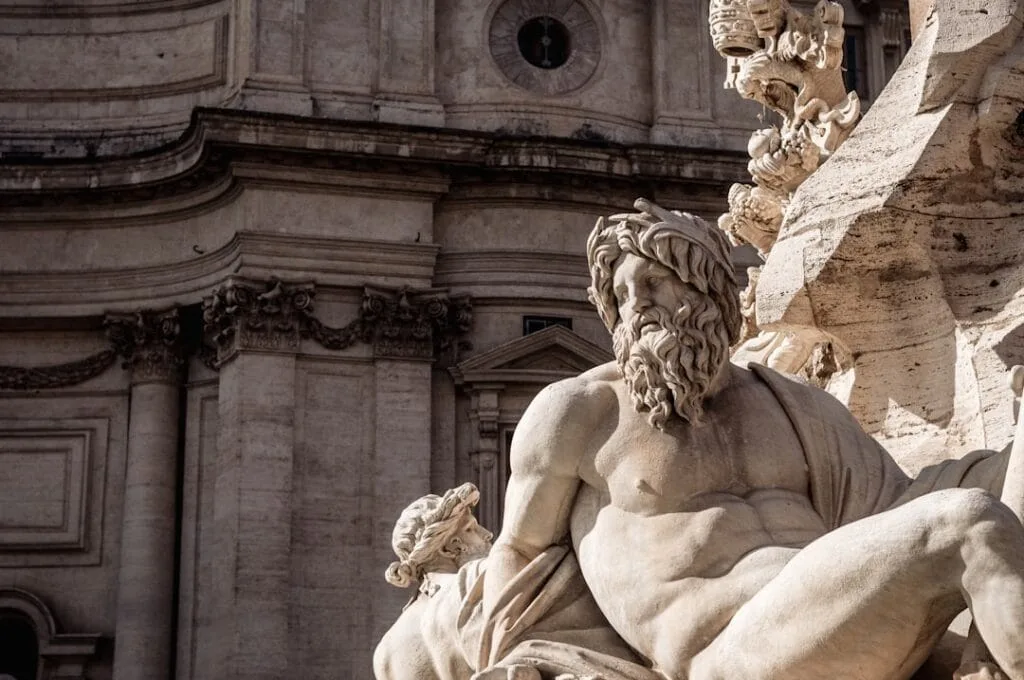
Gian Lorenzo Bernini, known in French as Bernin, is often hailed as the undisputed master of Roman Baroque. Born in 1598 in Naples and active in Rome for most of the 17th century, he transformed the city’s image by combining sculpture, architecture and liturgical staging. No institution showcases his genius more than the Vatican: where faith, power and art meet, Bernini created works that still dominate the visual and spiritual experience of pilgrims and visitors today.
Bernini’s creations at the Vatican are more than mere sculptures; they shape space, orchestrate light and direct the gaze toward emotional peaks. From the colossal bronze baldachin crowning the high altar of St. Peter’s Basilica to the dramatic transformation of the apse with the Cathedra Petri (St. Peter’s Chair), his intervention is comprehensive: he gives the sacred place a Baroque dramaturgy where architecture and sculpture endlessly converse.
This article aims to guide the reader through Bernini’s Vatican works: exact locations, precise addresses, practical details (hours, prices in euros), in-depth descriptions of the pieces and concrete tips to prepare your visit. We’ll describe not only the major sculptures — the Baldacchino, the Cathedra Petri, the statue of Saint Longinus and Pope Urban VIII’s funerary monument — but also Bernini’s shaping of public space, like the colonnade of Piazza San Pietro and the Scala Regia connecting the Vatican City to the papal apartments.
Following Bernini through the Vatican means traversing several dimensions: technique (marble, bronze, gilding), iconography (allegories, saints, popes) and liturgical staging (processions, altars, plays of light). This complete guide will help you locate each work precisely, understand its symbolism and find the best viewing points. We’ll also include essential practical info: official addresses, current prices in euros, opening hours and visiting recommendations.
1. St. Peter’s Basilica (Basilica di San Pietro in Vaticano): context, address and access
St. Peter’s Basilica is the Vatican’s symbolic and architectural heart, a monumental masterpiece where Bernini left several major marks. Essential practical info:
- Full name: Basilica di San Pietro in Vaticano / St. Peter’s Basilica
- Address: Piazza San Pietro, 00120 Città del Vaticano
- Opening hours: generally 07:00–19:00 from April to September; 07:00–18:30 from October to March (hours may vary for liturgical events or papal ceremonies)
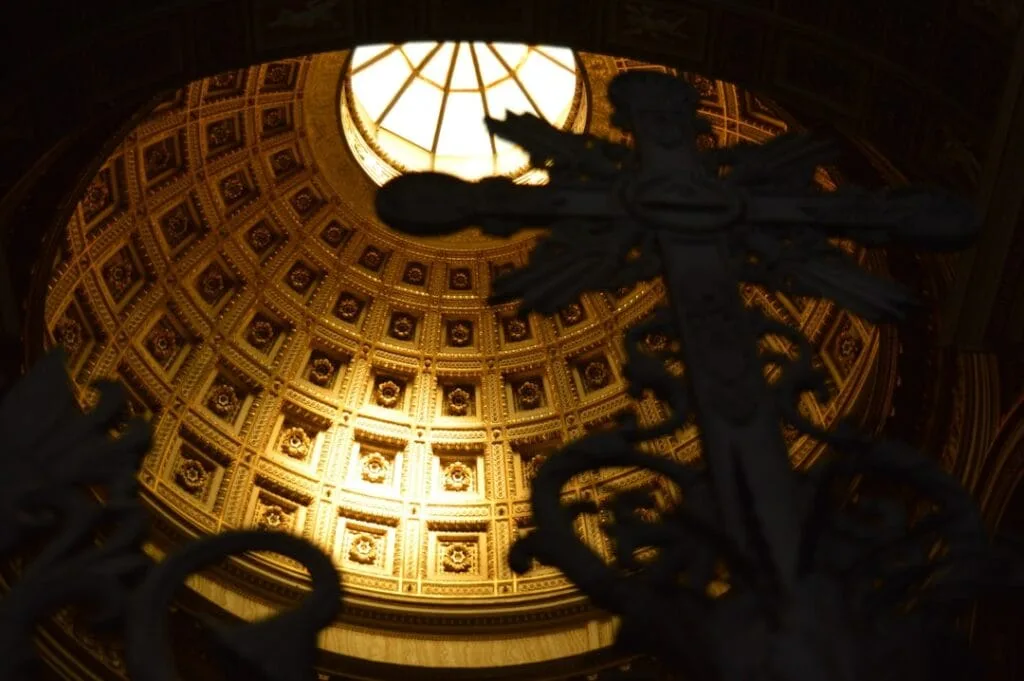
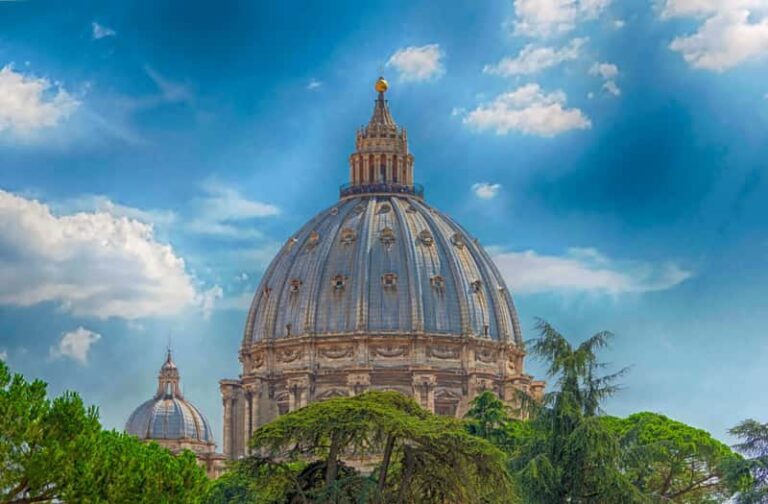
- Price: entry to the basilica is free; climb to the dome (Cupola): about €10 with elevator + 320 steps, €8 via stairs (≈ 551 steps). Rates may change; bring cash or card depending on ticket offices.
- Access: security check mandatory (queue and metal detectors). Main access via Piazza San Pietro. Strict dress code: shoulders and knees must be covered.
The basilica itself is an expansive stage where Bernini operates on multiple levels: monumental sculptures, altars, tombs and architectural devices that guide the pilgrim toward the choir and papal altar. Among his works, the Baldacchino holds the most central place: a gigantic gilded bronze canopy rising under Michelangelo’s dome, above the papal altar and the sacred ground of St. Peter’s tomb.
Beyond the Baldacchino, the Basilica houses the Cathedra Petri (the Chair of St. Peter) in the apse, the statue of Saint Longinus at the foot of the dome, and Pope Urban VIII’s funerary monument — a group of works that together show Bernini’s ability to unite theology, papal propaganda and unmatched technical virtuosity.
 Click here to book your guided tour of St. Peter’s Basilica

St. Peter’s Basilica and Bernini routes in the Vatican
Plan at least 1h30 to 3h depending on whether you climb the dome or visit the grottoes: time and a skip‑the‑line ticket radically change the experience. Indicative budget: basilica entry free, dome ascent options ~€8–€10, guided tours €33 to €265 depending on format.
Arrive early or late afternoon to avoid crowds, respect the dress code and carry water. These itinerary planners will help you focus your eyes on Bernini rather than the queue.
1. St. Peter’s Basilica: dome and grottoes
Guided tour focusing on the basilica: climb the dome for the view, visit the papal grottoes and get close-up views of the Baldacchino and the Cathedra Petri with historical commentary.
- ⏱️ Duration: 1.5 – 2.5 hours
- 🚩 Departure: Meeting point varies (depending on option)
- 🎧 Format: Group guided tour
- 🗣️ Languages: French, English, Italian, Spanish
- 🎟️ Included: Basilica access, dome ascent (depending on option)
2. Private Vatican tour with a specialist
Custom route around the museums and basilica: direct entry, a licensed guide, smooth access to the Sistine Chapel then the Baldacchino and the Cathedra Petri — ideal for deepening your Bernini knowledge.
- ⏱️ Duration : 3 – 4 hours
- 👥 Format : Private
- 📍 Itinerary : Vatican Museums → Sistine Chapel → St. Peter’s Basilica
- 🗣️ Languages : French and others on request
- 🎟️ Access : Direct entry, skip‑the‑line
2. The Baldacchino: description, location and symbolism
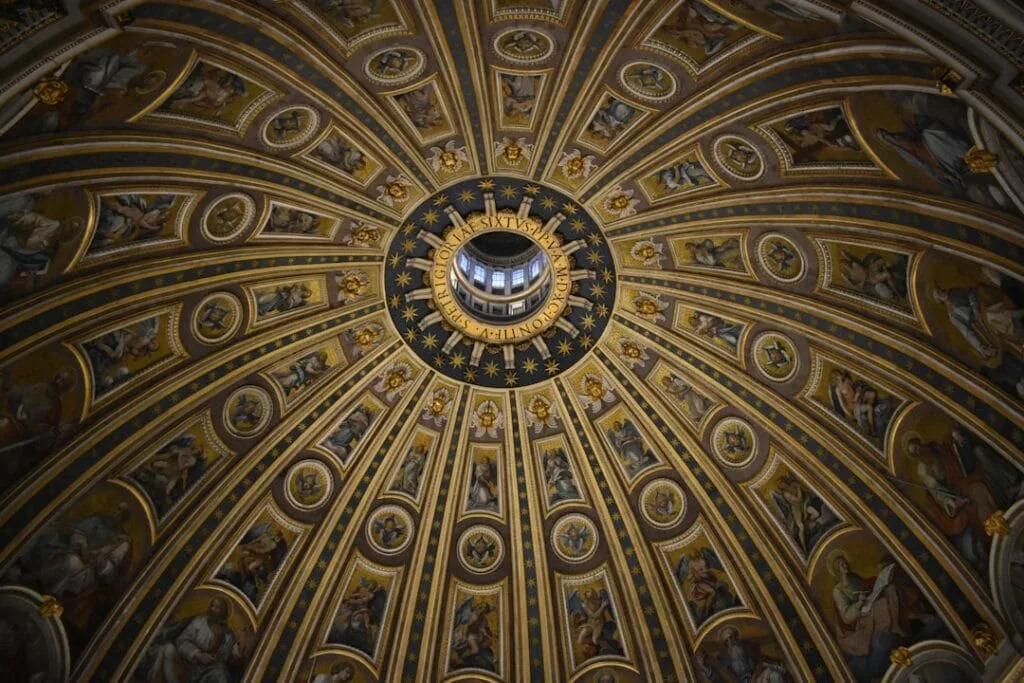
The Baldacchino of St. Peter is arguably Bernini’s most immediately recognizable work in the Vatican. Commissioned by Pope Urban VIII (Maffeo Barberini) and executed between 1624 and 1633, it marks the focal point of the papal sanctuary. About 29 metres high, it stands beneath Michelangelo’s dome and rises above the papal altar, considered the liturgical heart of the basilica.
Materials and techniques: the Baldacchino is made of gilded bronze resting on four twisted Corinthian columns, inspired by the columns of Solomon’s Temple according to Christian tradition. The gilding emphasizes the volumes and catches the light, giving the canopy a theatrical reading — it is both altar and heavenly throne, a visual device asserting papal authority.
Revealing details: on the feet and panels you can see the bees and heraldic motifs of the Barberini family, emblems of the commissioning pope. Around the column shafts, garlands, putti and ornamental trophies narrate a complex iconography mixing religious allegory and references to papal power. The twisted columns create an upward movement, directing the gaze toward the dome and the heavens.
Access and viewing: the Baldacchino is visible directly from the central nave of the basilica. To get a closer look, position yourself on the floor of the canopy during quieter hours (early morning or late afternoon). Allow time for security checks. Although entry to the basilica is free, paid guided tours focused on the Baldacchino’s history can be booked through tour operators or accredited guides to obtain a detailed iconographic reading.
Click here to explore St. Peter’s Basilica with dome option
3. The Cathedra Petri (Chair of Saint Peter) and the theatrical apse
The Cathedra Petri (Chair of Saint Peter) is a late Bernini work, made between 1658 and 1666, installed in the apse of St. Peter’s Basilica. It is an altar-theatre: the historic wooden chair (traditionally attributed to Saint Luke) is set into a monumental throne of bronze and marble, supported by the Church Fathers.
Exact location: the apse of St. Peter’s Basilica, behind the high altar and the Baldacchino, in the eastern part of the basilica. It’s a highlight of the visit, as the Chair is topped by a large translucent window representing the Dove of the Holy Spirit, surrounded by a baroque radiance of light.
Materials and iconography: Bernini uses marble, bronze and gilding to create a monumental ensemble. Four colossal figures personify the Fathers of the Latin and Greek Church (Saint Ambrose, Saint Athanasius, Saint Augustine and Saint John Chrysostom) and act as visual supports for the throne of apostolic power.
Symbolism: the Cathedra Petri is not merely a liturgical object; it is a declaration of apostolic continuity and the legitimation of Roman primacy. Bernini’s staging combines architecture, sculpture and light to present the papacy as a divine mandate. The work plays on contrasts: the darkness of sculpted masses against the supernatural light of the window, sculptural realism against theological iconography.
Visit tips: to admire the Chair, stay in the apse late in the day when natural light filters through the stained glass and makes the scene particularly moving. Respect restricted areas and liturgical celebrations: the apse may be closed to the public during solemn masses.
Click here to visit St. Peter’s Basilica and its papal tombs
4. Saint Longinus, the tomb of Urban VIII and other funerary monuments
Bernini also left his mark on the basilica with several funerary sculptures and monumental statues. Among them, the statue of Saint Longinus (1649–1657) stands out for its expressive power; it is located in the crossing of the transept, at the foot of the dome, and represents the soldier who pierced Christ’s side. The work is remarkable for the animation of movement and the emotion on the saint’s face, hallmarks of Bernini’s style.
Another major work is the funerary monument of Pope Urban VIII (Maffeo Barberini), executed between 1634 and 1647 and located in the basilica. This papal tomb showcases Bernini’s ability to handle political allegory by incorporating allegorical figures (Religion, Justice, Truth, etc.), as well as the baroque grandiloquence used to glorify the pontiff’s memory.
Technical details and materials: most of these monuments combine polychrome marbles (white marble, black marble, green marble) and elements in gilded bronze. The use of contrasting marbles allows sculpted, textured drapery, expressive faces and architectural framing elements around the statues. Bernini excels at creating a dramatic effect where bodies seem animated, almost theatrical, amplifying the emotional impact for the faithful.
Practical location: the tombs and statues are found at various points along the nave and transept. For an organized visit, ask for a map at the basilica entrance or locate these works via audioguides available on site. The risk is moving too fast: take time to approach each monument to study the iconographic details, heraldic symbols (such as the Barberini bees), and the finish of facial expressions.
Visiting tips: avoid peak hours (noon–3pm) if you want close-up views and photos without the crowds. Respect restricted areas around altars and tombs. While most monuments are visible, some sections may be temporarily closed for restoration or liturgical reasons.
5. St. Peter’s Square, the colonnade and the Scala Regia: Bernini as urban planner and stage director
Bernini didn’t only sculpt inside the basilica; he reshaped the Vatican’s public space. The colonnade of St. Peter’s Square (Piazza San Pietro, 00120 Città del Vaticano) is one of his urban masterpieces. Designed between 1656 and 1667, this vast ellipse of 284 columns (arranged in four rows) encircles the square and creates a symbolic embrace to welcome the faithful.
Description and symbolism: the colonnade is formed of two arms that open like the Church’s maternal embrace, symbolizing universal welcome. At the top, statues of saints (partly produced by Bernini’s workshop) punctuate the skyline and enhance the square’s visibility from different urban perspectives. The layout of St. Peter’s Square and its carefully calculated perspective contribute to an ordered visual experience: the basilica appears farther away or closer depending on where you stand, a hallmark of Baroque theatricality.
The Scala Regia (Royal Staircase) is another scenographic element designed by Bernini inside the Vatican complex. This monumental ramp links ceremonial movement to the papal apartments and official spaces: it features an exaggerated perspective that heightens the ascent and solemnity. The Scala Regia is located in the Apostolic Palace and opens onto the loggia and the square in a sequence of theatrical reveals intended for public ceremonies.
Practical information and access:
- Address Piazza San Pietro : Piazza San Pietro, 00120 Città del Vaticano
- Access to the colonnade : free and open, but the area may be closed for papal audiences or ceremonies.
- Scala Regia : accessible via the Vatican Museums (Musei Vaticani) — address: Viale Vaticano, 00165 Roma RM — during museum opening hours; it is part of the tour route or can be seen on guided tours.
- Vatican Museums opening hours : generally Monday–Saturday 09:00–18:00 (last entry 16:00). Closed on Sundays except the last Sunday of the month (free entry 09:00–14:00, last entry 12:30).
- Museum prices : standard ticket about €17 (base rate) + €4 online reservation fee = €21 total if bought on the official site. Reduced rates and exemptions apply by age and status.
Practical tips: to photograph the colonnade and appreciate the Scala Regia, aim for golden hour (early morning or late afternoon); these times give low light that highlights the columns and sculptures. If you want to visit the Scala Regia as part of an in-depth guided tour, book a museum tour that includes the historical route to the papal apartments.
Click here to buy a ticket for the Vatican Museums and the Sistine Chapel
Conclusion: Bernini at the Vatican — an experience to live
Visiting Bernini’s works at the Vatican means letting yourself be led through Baroque dramaturgy where every statue, column and beam of light was calculated to touch both eye and heart. From the material power of the Baldacchino in gilded bronze to the luminous mystique of the Cathedra Petri, through the theatrical funerary monuments and the colonnade’s benevolent urbanism, Bernini redefined how art can serve liturgy, politics and devotion.
Practicalities and precautions: to fully enjoy this heritage, plan your visit around opening hours and liturgical feasts, book Vatican Museums tickets in advance (standard ticket ≈ €17 + €4 reservation), arrive early to avoid crowds at St. Peter’s Basilica (free entry, Hours: 07:00–19:00 or 07:00–18:30 depending on the season) and respect the dress code. If you want to climb the dome, budget for the access fee (≈ €8–€10 depending on elevator or stairs) and be prepared physically for the final steps.
Recommended viewpoints: for an overall panorama, stand on St. Peter’s Square and watch the colonnade embrace the piazza; for sculptural details, approach the Baldacchino and the tombs; for spiritual theatrics, linger in the apse to contemplate the Chair of Saint Peter under the stained-glass light. Remember the visit is not only visual: listen to guides, read the panels, and let yourself soak in the history and symbolism that make Bernini indispensable.
The Berninian route at the Vatican is a multifaceted experience: artistic, spiritual and historical. Whether you come for scholarship, faith, or aesthetic wonder, Bernini’s work at the heart of Rome remains an invitation to understand how art can shape sacred space and collective memory.
