





Introduction
Rome is a city where every stone tells a story, and its religious sites are often the most elaborate and eloquent chapters. Wandering the cobbled streets you’ll find basilicas, bas‑reliefs, mosaics and crypts that speak to both ancient Roman times and medieval to modern Christian history. This “map” isn’t only geographic: it’s cultural, spiritual and architectural. It aims to guide the curious traveler to the must‑see religious sites, with practical info — exact addresses, prices in euros, opening hours — plus detailed descriptions to help you understand what you’re seeing.
Whether you’re devout, an art lover, a budding historian or just out for a stroll, knowing these places helps you appreciate Rome’s layered history. Some basilicas are free to enter but hide surprises in their museums or domes; others charge for access to specific areas like the crypt, the cloister or the climb to the dome. Hours can change with the seasons, liturgical celebrations or public holidays. That’s why this guide mixes practical elements (address, approximate prices, typical hours) with observation tips (best viewpoints, chapels not to miss, iconographic quirks).
Below you’ll find five major stops — each with a practical sheet — composing a kind of Roman religious route, from the heart of the Vatican to the historic papal basilicas, including the temple‑turned‑church that illustrates the continuity between Antiquity and Christianity. Each section details what to see, where to stand for the best photos or reflection, and recommendations on the best time to visit to avoid crowds or attend services. Lace up your walking shoes and bring curiosity: the route starts now.
Basilica di San Pietro (St. Peter’s Basilica)
Address
Basilica di San Pietro, Piazza San Pietro, 00120 Città del Vaticano, Vatican.
Hours
- Opening hours: typically 7:00–19:00 in summer, 7:00–18:30 in winter. Hours may change for papal events.
- Dome : the climb is usually open 8:00–17:00 (last ascent), subject to change.
Price
- Entry to the basilica : free (security checks required).
- Access to the dome : around €10 with elevator + stairs, or about €8 if you climb only by stairs (indicative prices).
- Museo del Tesoro / guided tours : variable, often between €6 and €20 depending on format and language.
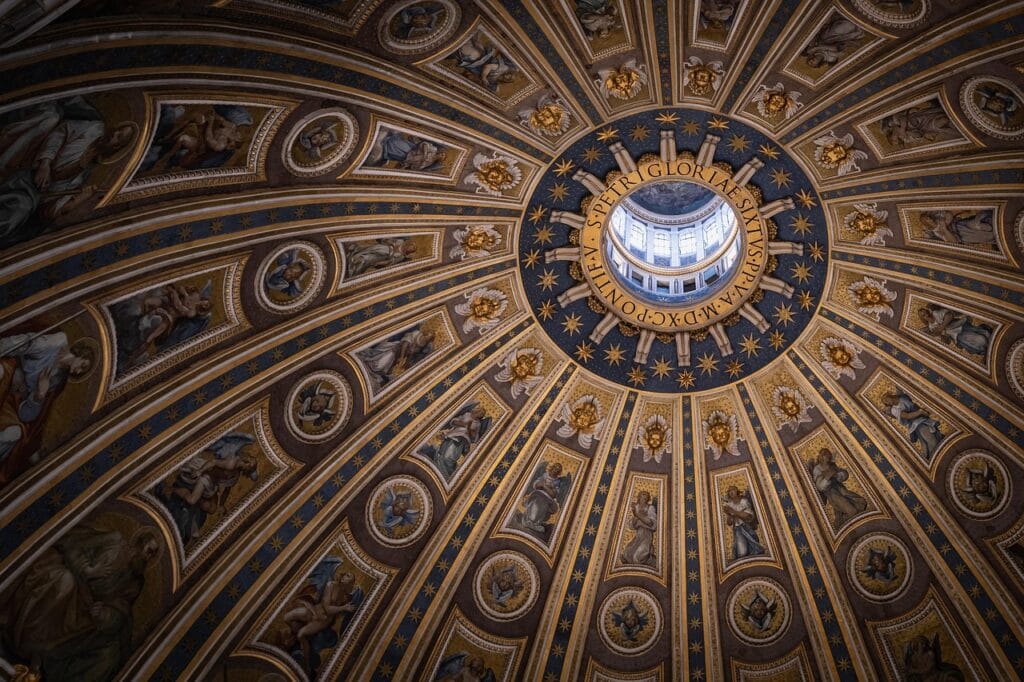
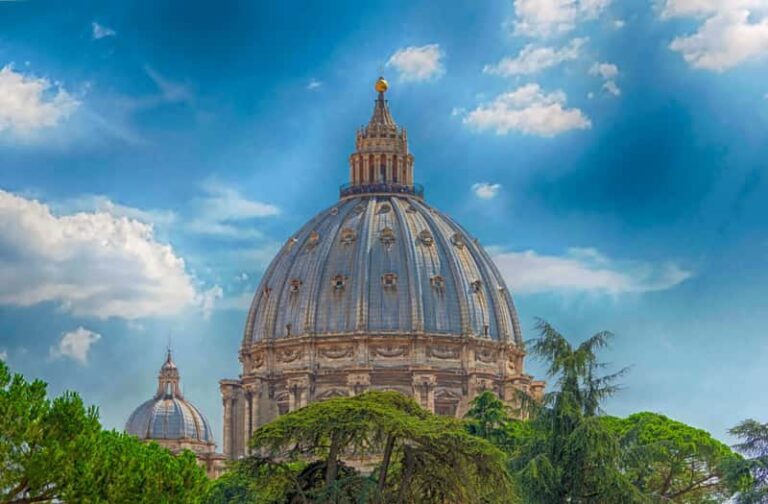
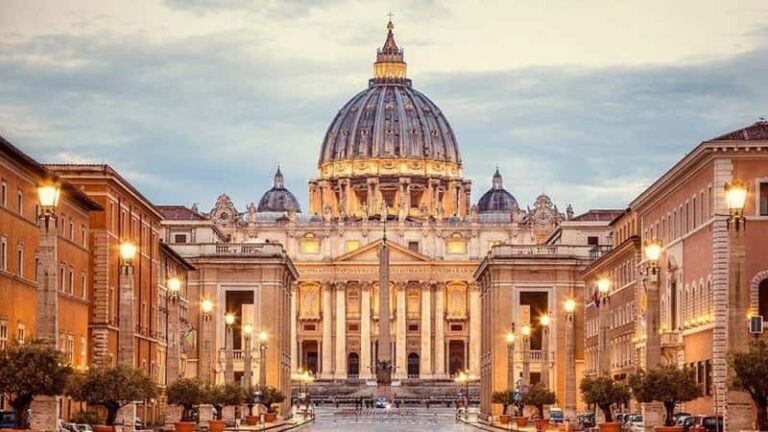
St. Peter’s is the artistic pinnacle of Roman Catholicism: a vast nave, Bernini’s baldachin, Michelangelo’s Pietà and a succession of richly decorated side chapels. From the moment you enter you feel the monumental scale — Michelangelo’s dome dominates the space, a perfect example of how architecture and theology combine to create a spiritual experience. The climb to the dome is worth the effort: from the top St. Peter’s Square fans out below and Rome’s rooftops and bell towers stretch to the horizon.
 Click here to book your full St. Peter’s guided tour

Practical tips: arrive early to avoid crowds and long security lines, respect the dress code (shoulders and knees covered), and allow time for the Vatican grottoes (the necropolis under the basilica) if you want to see Saint Peter’s tomb — access to these areas is by reservation and may be paid.
Basilica di San Giovanni in Laterano (Basilica of St. John Lateran)
Address
Basilica di San Giovanni in Laterano, Piazza di San Giovanni in Laterano, 4, 00184 Roma RM, Italy.
Hours
- Opening hours: typically 7:00–18:30 / 19:00 (may vary by season and celebrations).
- Scala Santa and other sections of the complex : often open 9:00–17:00, check public holidays.
Price
- Entry to the basilica : free.
- Museums and Scala Sancta (Holy Stairs) : around €8–€10, reduced rates for students/young people.
St. John Lateran is the official cathedral of the Diocese of Rome and the Pope’s cathedral. Less visited than St. Peter’s by tourists, it remains essential: a baroque façade, a five‑nave interior richly decorated, paleochristian mosaics and a liturgical setting that recalls its status as the “mother and head of all the churches of the city and the world.” The adjacent cloister and museum plunge you into paleochristian architecture and liturgical life through the centuries.
Click here to book your visit to the Lateran Palace

Not to miss: the Scala Sancta, the “holy stairs” traditionally said to be those climbed by Jesus during his trial before Pilate, brought to Rome according to tradition. Climbing them is an act of devotion for some and a historical experience for others. For photographers and art historians, the presbytery mosaics and side chapels offer fascinating iconographic details linked to popes and councils. Allow at least 1–2 hours for a full visit of the complex.
Skip the queues to major basilicas
Plan for crowds.
Crowds and variable hours require planning — mornings and late afternoons are often quieter, and some areas close during services. Choosing a guided time slot or a combined ticket lets you reach the dome, crypt or cloister without dithering.
1. St. Peter: Dome and Grottoes
Tour focused on climbing the dome and descending into the Vatican grottoes: architectural perspective and Saint Peter’s tomb, ideal for those who want a deep understanding of the Vatican’s sacred space.
- ⏱️ Duration : 1.5 – 2.5 hours
- 🎧 Format : Guided tour + dome access
- 🎟️ Access : Fee for ascent and grottoes
- 🗣️ Languages : French, English, Italian, Spanish…
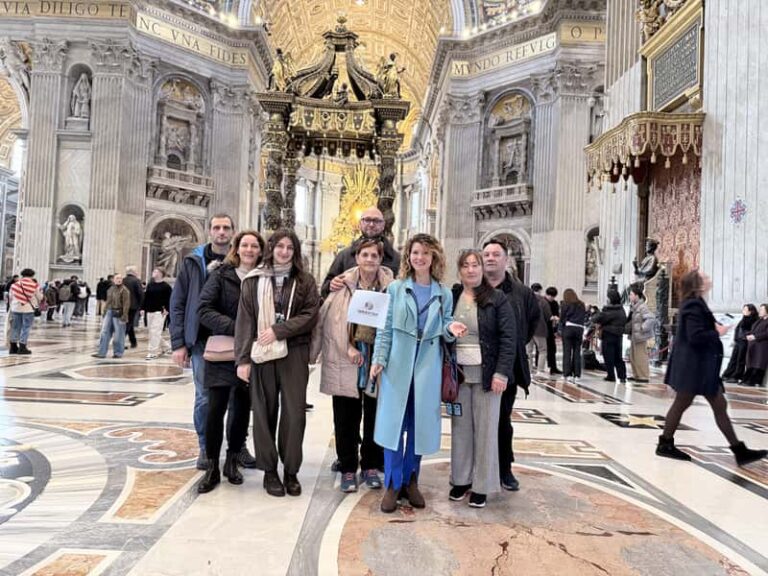
2. St. Peter: budget option
Standard entry with a guided tour focusing on the interior and major artworks without the ascent; a good choice when the dome is full or for budget travelers.
- ⏱️ Duration : 1.5 – 2.5 hours
- 👥 Format : Guided tour (without dome)
- ❌ Not included : Dome ascent
- 🗣️ Languages : French, English, Italian…
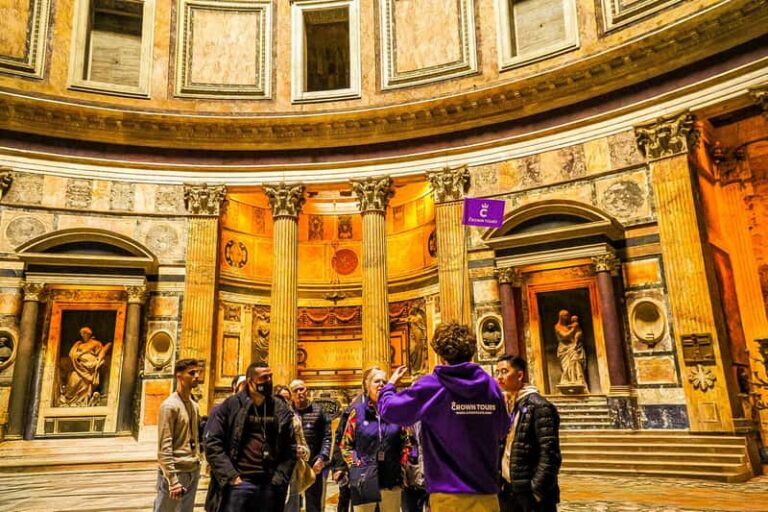
3. Pantheon: architectural visit
Short guided tour focused on the structure and the oculus: explanation of the concrete dome, its conversion into a church and the illustrious tombs, perfect for a cultural break in the city center.
- ⏱️ Duration : 45 minutes
- 🚩 Start : Piazza della Minerva
- 💡 Highlight : Oculus and dome structure
- 🗣️ Languages : French, English, Italian…
4. Tour of the four papal basilicas
Long itinerary covering St. Peter, St. John Lateran, Santa Maria Maggiore and St. Paul Outside the Walls: a synthetic approach to grasp the rituals, architecture and urban connections between these sites.
- ⏱️ Duration : 5 hours
- 📍 Route : Four major basilicas
- 🚶 Format : Guided walking tour
- 👌 Ideal for : Visitors wanting an overview
Basilica di Santa Maria Maggiore (Basilica of Saint Mary Major)
Address
Basilica Papale di Santa Maria Maggiore, Piazza di Santa Maria Maggiore, 42, 00185 Roma RM, Italy.
Opening hours
- Opening hours: generally 7:00–20:00 (varies by season and services).
- Museum and cloister: usually open 9:00–17:00.
Prices
- Basilica entry: free.
- Museo e Chiostro (museum and cloister): around €5–€7.
- Campanile (if accessible): variable fee, usually a few euros.
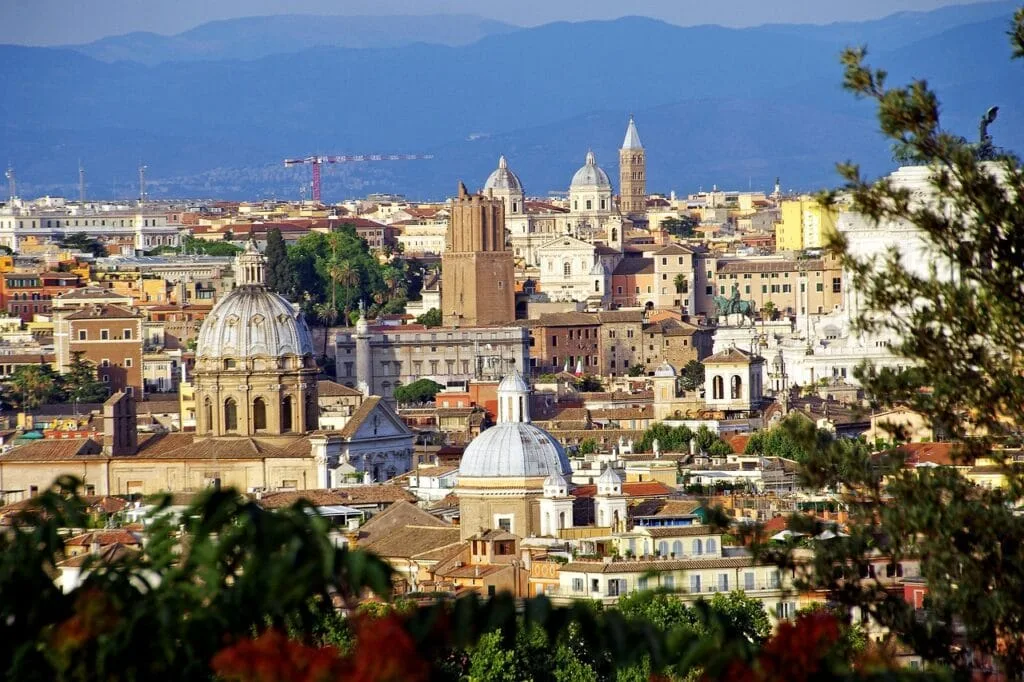
The Basilica of Santa Maria Maggiore is famed for its 5th‑century Byzantine mosaics and its polychrome marble floor. It’s one of the best examples of continuity between late antique and medieval art. The basilica also houses the papal « Crèche » and richly decorated chapels. The mix of ancient mosaics, Baroque altarpieces and later decorative elements makes it a lively, layered place.
Click here to book your ticket for Santa Maria Maggiore with audio guide
Recommended visit: spend time at the sanctuary mosaics and the chapel of the Salus Populi Romani, a much‑venerated icon. The adjacent cloister, less crowded, is a peaceful haven where you can study carved capitals and architectural fragments. As with any major basilica, be mindful of solemn masses that may restrict access to some areas.
Basilica di Santa Maria ad Martyres (Pantheon)
Address
Basilica di Santa Maria ad Martyres (Pantheon), Piazza della Rotonda, 00186 Roma RM, Italy.
Hours
- Opening hours: generally 9:00–19:00, but times can vary with the season and religious services (notably Sunday mass).
Prices
- Entry: access to the church has historically been free but tourist entrance fees may be applied; expect between €0 and €4 depending on season and local rules (check on site).
The Pantheon is a masterpiece of Roman architecture converted into a Christian church known as Santa Maria ad Martyres. Its perfectly preserved dome and central oculus, which lets in light and rain, create a unique visual experience. Inside are tombs of famous Italian figures, including the artist Raphael, and a layout that illustrates the Christian reappropriation of a pagan space.
Click here to book your guided visit to the Pantheon with ticket

Notes and tips: respect mass times which may restrict photography and require silence. The best time to see full light through the oculus is in the morning, when beams cross the central space and draw bright circles on the floor. The square around the Pantheon is perfect for sitting and watching Roman life, cafés and gelaterias included.
Basilica Papale San Paolo fuori le Mura (Saint Paul Outside the Walls)
Address
Basilica Papale di San Paolo fuori le Mura, Piazzale San Paolo, 1, 00146 Roma RM, Italy (near Via Ostiense).
Hours
- Opening hours: generally 7:00–18:30 / 19:00, with variations for celebrations and maintenance.
Prices
- Basilica entry: free.
- Museo e chiostro: visit to the cloisters and archaeological museum: around €4–€6.
The Basilica of Saint Paul Outside the Walls is one of Rome’s four major papal basilicas and stands out for its vast façade and beautiful Cistercian cloister. The church preserves the tomb traditionally attributed to the apostle Paul, located beneath the high altar, and a frieze featuring portraits of all the popes up to recent times. After an 19th‑century fire the basilica was restored, and the interior blends ancient elements with richly decorated reconstructions.
Click here to book your tour of Rome’s papal basilicas
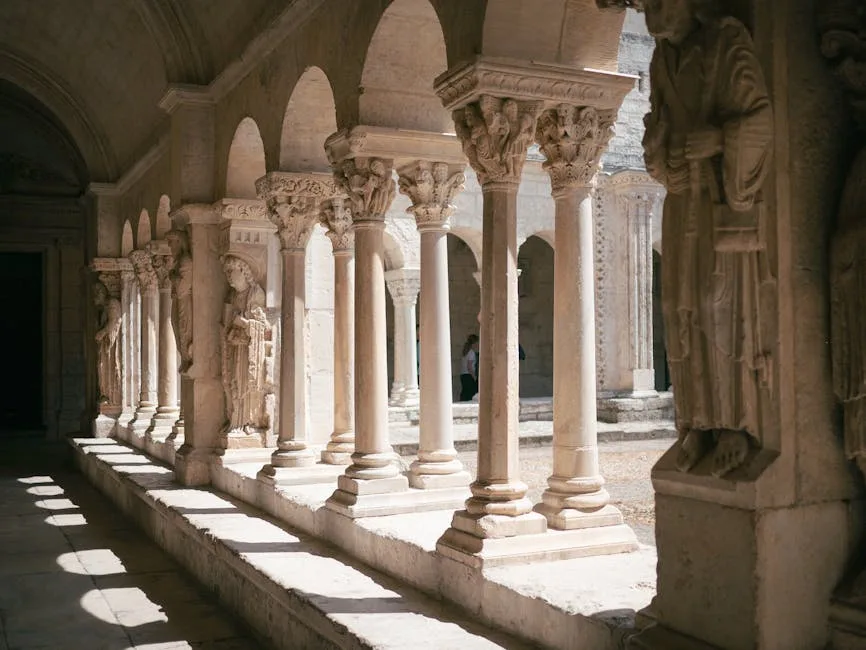
Note: the area around the tomb and presbytery may be subject to checks and sometimes specific guided visits. The medieval cloister, with its carved columns and displayed historic textiles, is a calm spot ideal for photography and contemplation. Plan public transport (metro line B to « Piramide » then bus or walk) if you’re coming from the historic center.
Conclusion
Rome offers an exceptional density of religious sites, each telling a different chapter of the city’s religious, artistic and social history. From the papal grandeur of St Peter’s to the Byzantine mosaics of Santa Maria Maggiore, from the Pantheon reconciling Antiquity and Christianity to the solemn cloister of Saint Paul Outside the Walls, every visit is a history lesson. The addresses and hours provided here are meant to help your exploration, but remember schedules can change with liturgical celebrations and special events; it’s wise to check before you go.
General tips: bring clothing that covers shoulders and knees out of respect for places of worship, keep quiet during services, and expect queues at security checks (especially at the Vatican). If you want deeper insight, book guided tours that explain the historical and artistic context; for paid sites, favor online tickets to skip lines. Finally, take time to notice details: a mosaic fragment, a carved capital, a forgotten inscription can tell you as much as the major works.
Have a rich and memorable spiritual and cultural trip to Rome — may this guide to the city’s must‑see religious sites help you plan rewarding visits.