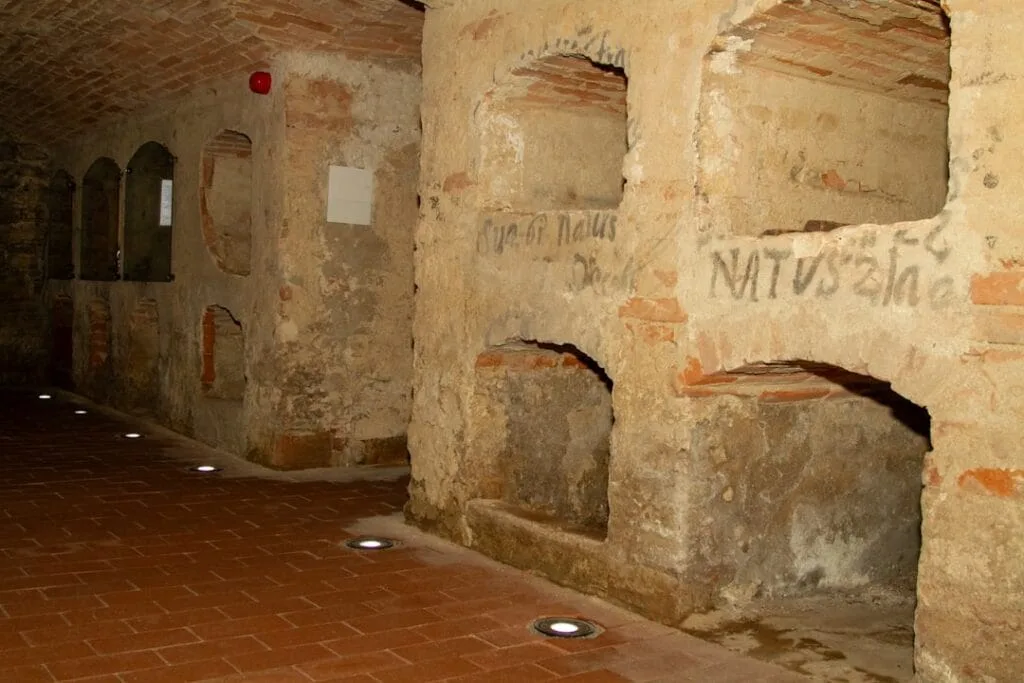






1. Catacombe di San Pancrazio (Basilica di San Pancrazio)
Full name: Catacombe di San Pancrazio and Basilica di San Pancrazio
Address: Via Aurelia Antica, 126, 00165 Roma RM, Italy
Indicative price: Adult entry around €6, reduced €4 (students/young people), some free admissions in specific cases. Some guided tours may cost €8–€10.
Opening hours: generally 9:00–13:00 and 15:00–18:00 (Tuesday–Sunday). Closed on Monday; hours vary on holidays. Last entry 30–45 minutes before closing.
The San Pancrazio necropolis sits on the Via Aurelia Antica, west of Rome and fairly close to the Vatican, making it a perfect first stop after a morning at St. Peter’s Square. The current basilica, rebuilt in the 17th century, overlays one of the oldest cult traditions honoring Saint Pancras, a young martyr. The catacombs themselves extend beneath and around the church: you descend stairs into galleries paved with loculi (small burial niches) and cubicula (small funerary chapels).
 Click here to book a guided tour of the Roman catacombs
Highlights: an intimate, low‑tourist atmosphere, visible funerary inscriptions, and the proximity of an active basilica that helps trace the continuity between commemorative worship and burial sites. Local guides explain the link between martyrs, pilgrimages and the architectural transformations from late Antiquity through the medieval period.
Practical tips: wear sturdy shoes (uneven stones), a light jacket (it’s cool and damp), and book a guided tour in English or Italian if possible. Access may be limited for those with reduced mobility due to stairs.
2. Catacombe di Priscilla
Full name: Catacombe di Priscilla (Catacombs of Priscilla)
Address: Via Salaria, 430, 00198 Roma RM, Italy
Indicative price: Adult entry around €8, reduced €6 (children/students/EU students), audio guide sometimes included. Private guided groups on request from €50 per group.
Opening hours: 9:00–12:00 and 14:00–17:00 (Tuesday–Sunday). Closed on Monday. Last entry 16:30.
The Catacombs of Priscilla are famed for some of the oldest Christian paintings known in Rome, including depictions of the Virgin and Good Shepherd iconography. Located along the ancient Via Salaria, they were used by a powerful Roman aristocratic family—the gens Priscilla—and contain decorated cubicula, Greek and Latin inscriptions, and carved sarcophagi.
Click here to book an underground tour of the crypts and catacombs
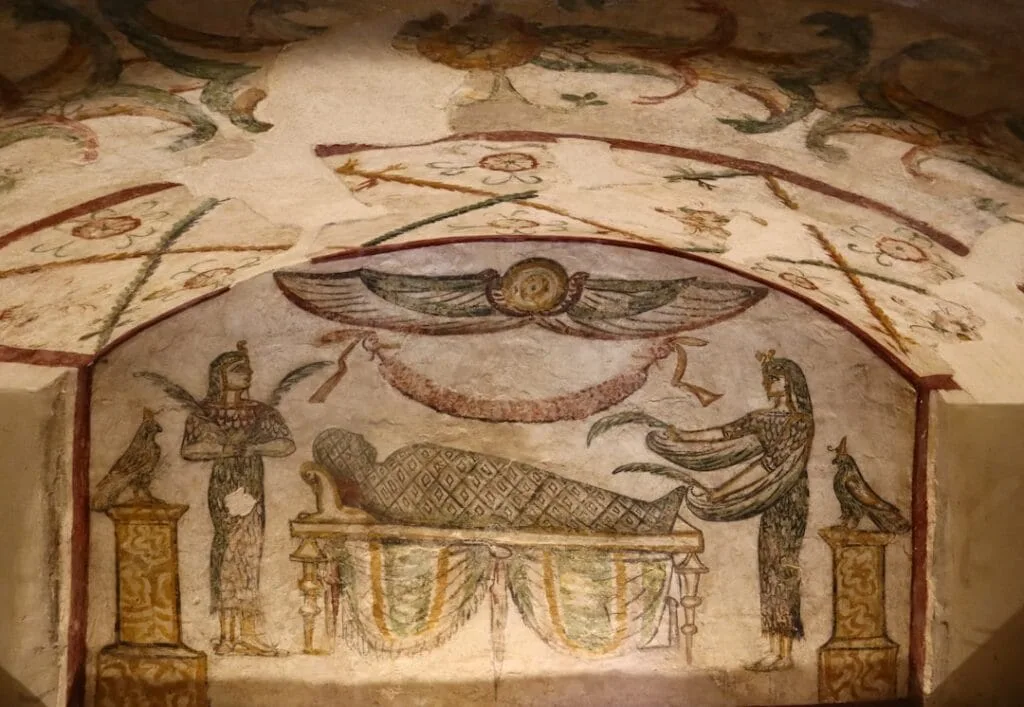
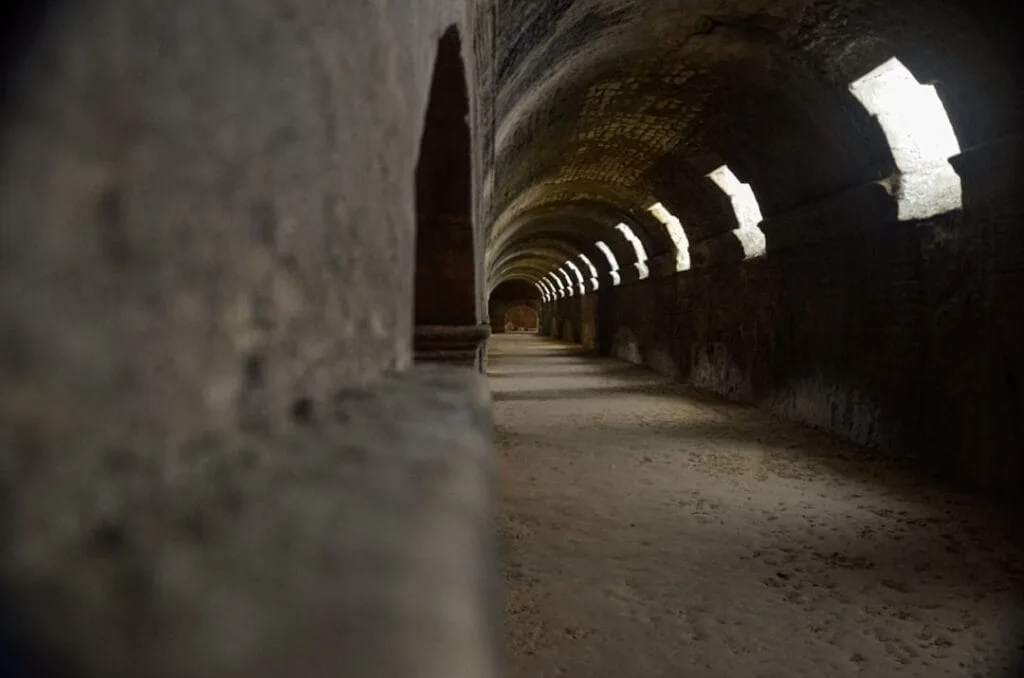
Detailed description: the main gallery forms low‑ceilinged corridors lined with niches where remains were once placed. The « Cubiculum of the Virgins » and the « Room of Paintings » showcase transitional Christian art: stylized biblical scenes, symbols (fish, Good Shepherd) and some of the earliest portraits of the Virgin Mother, sometimes considered the oldest Marian depiction. The visit also includes an ancient rock chapel and sections dedicated to funerary inscriptions explaining the deceased’s status and titles.
Practical points: the tour is guided and may last 40–60 minutes; there’s no need to bring a flashlight as lighting is installed. On‑site signage requests silence and care—the pigments are fragile and low light enforces strict rules (no flash).
3. Catacombe di San Sebastiano (Catacombs of St. Sebastian)
Full name: Catacombe di San Sebastiano, located under the Basilica Apostolica di San Sebastiano fuori le mura
Address: Via Appia Antica, 136, 00179 Roma RM, Italy
Indicative price: Single adult ticket €8–€10, reduced €6. Combined ticket (basilica + catacombs + mausoleum) often available around €12–€15.
Opening hours: generally 9:00–17:00 (daily), sometimes closed between 13:00–14:00 depending on the season. Last entry varies.
The San Sebastiano catacomb is one of the most famous along the Via Appia Antica. The site combines a basilica built above (the Basilica of San Sebastiano fuori le mura) and an underground network that served as a necropolis from the early centuries of the Empire. Saint Sebastian’s name is linked to the site because, by tradition, his remains were brought here; the place retains a strong connection to the memory of martyrs.
Click here to book a ticket for the Catacombs of Saint Sebastian
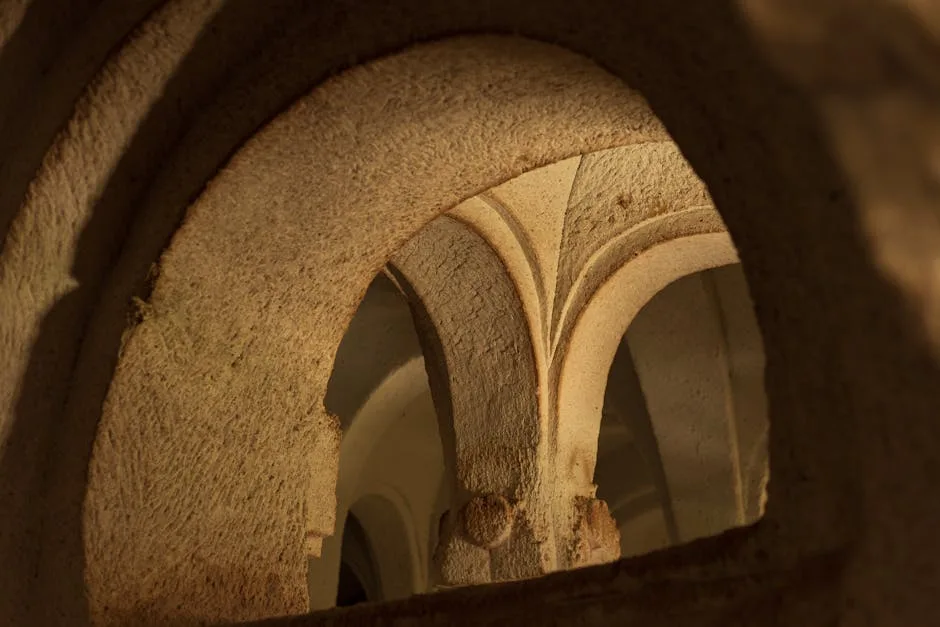
In‑depth description: you enter through a basilical complex that serves as the welcome point. The underground galleries run across several levels, with main passageways and side chambers. You’ll see open loculi, arcosolia (arched niches), carved sarcophagi and tibial frescoes. Guides explain burial techniques, the role of early Christian communities and how the catacombs were used and rediscovered over the centuries.
Immediately nearby are other ancient sites (the Via Appia Antica itself is an open‑air museum), so you can plan a half‑day combining the catacomb visit with a stroll along the Roman road. Note: in high season, aim for the first hour of opening to avoid crowds.
Booking and planning your underground visits
Watch the tightly scheduled times and Monday closures: several catacombs limit last entries and close early in the week, so plan accordingly. In high season, aim for the earliest hours to avoid crowds and enjoy a more contemplative visit.
4. Catacombe di Domitilla
Full name: Catacombe di Domitilla (Catacombs of Domitilla) and Basilica delle Sette Chiese
Address: Via delle Sette Chiese, 282, 00179 Roma RM, Italy
Indicative price: Adult entry around €8–€10 (rates may or may not include access to both levels), reduced €5–€7 for youth and school groups.
Opening hours: 9:00–18:00 (seasonal variations), guided tours scheduled every hour; closed one day a week according to the official calendar.
The Domitilla catacombs are among Rome’s largest and best-preserved. Located where several ancient roads met, they spread over kilometres of galleries on two levels. The name comes from the Domitilla family, linked to the imperial court; the necropolis contains both lavish family tombs and more modest burials.
Detailed description: the guided tour ventures into wide corridors punctuated by large burial chambers decorated with frescoes and inscriptions. You’ll see Christian pictorial cycles and religious symbols (fish, doves, Eucharistic scenes) as well as ancient graffiti left by pilgrims and later visitors. Archaeologists have unearthed tufa sarcophagi, mosaics and remnants of small monastic chapels that testify to the site’s continuous occupation and reinterpretation over the centuries.
Click here to book a guided tour of the Roman catacombs
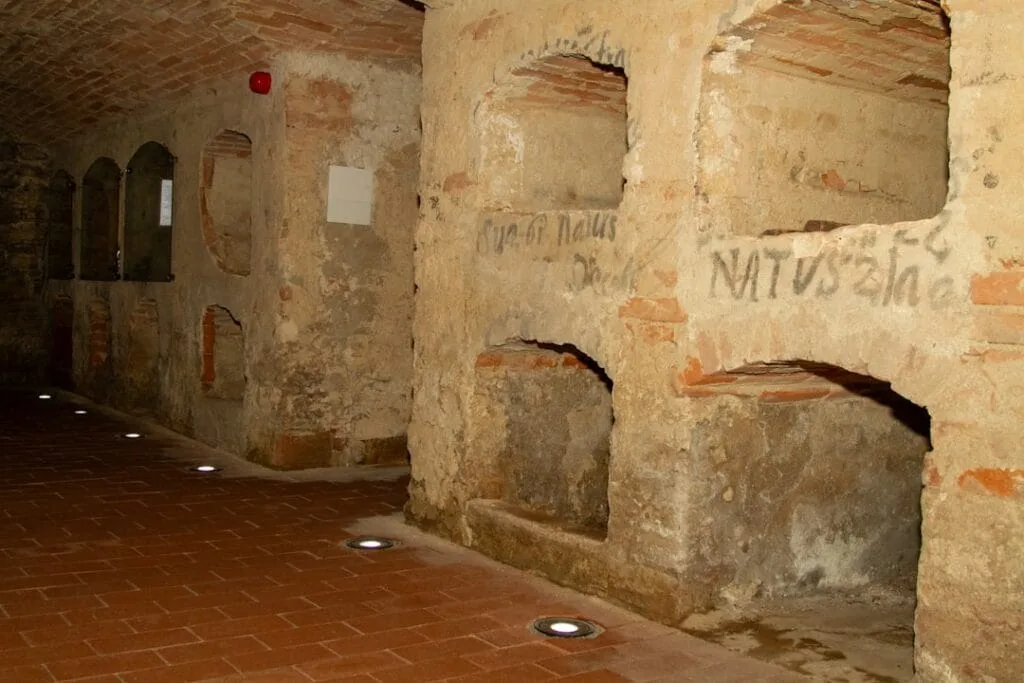
Practical info: the visit can last 60–90 minutes depending on access level. The upper part is more accessible, while the deep underground can involve some stairs. Audio guides are sometimes offered in multiple languages. Photography without flash is allowed in some areas; check with the guide.
5. Catacombe di San Callisto (Catacombs of St. Callixtus)
Full name: Catacombe di San Callisto (Crypt of the Popes) – Complesso dei Santi Sebastiano e Callisto, Via Appia Antica
Address: Via Appia Antica, 110, 00179 Roma RM, Italy
Indicative price: Adult entry around €8, reduced €6; guided tour sometimes included. Combined tickets with other catacombs possible depending on the tour operator (€12–€16).
Opening hours: 9:00–12:30 and 14:00–17:00 (Tuesday–Sunday). Last entry around 16:30. Closed on Monday.
The San Callisto catacombs are famous for the « Crypt of the Popes, » where several early popes are said to have been buried. Located on the Via Appia Antica, they are one of the most important paleochristian necropolises, with monumental galleries carved into volcanic rock and many chambers where Christian families and religious communities gathered.
Description: the route reveals vast galleries lined with loculi, arcosolia and richly decorated cubicula. You’ll find paintings depicting biblical scenes, early Christian symbols (anchor, fish, Good Shepherd) and inscriptions naming bishops and faithful. The « Crypt of the Popes » is of particular interest to ecclesiastical history fans: it illustrates the practice of papal burials before the papal burial site was moved elsewhere.
Tips: the visit is often guided and can be combined with San Sebastiano for a full half-day on the Via Appia. Expect cool areas and uneven ground. Check for temporary exhibitions along the route — some archaeological finds are displayed on site or in annexed facilities.
Click here to book a ticket for the Catacombs of Saint Callixtus
Conclusion
The catacombs near the Vatican offer more than a tourist thrill: they provide a true immersion into underground Rome, where you can read traces of a changing world — from Roman funerary practices to early Christian iconography. Whether you choose the quiet of San Pancrazio, the pictorial finesse of Priscilla, the monumental scale of Domitilla, the basilica+necropolis combo at San Sebastiano, or the historical value of San Callisto, each site tells a different story, enriched by guides and inscriptions that link names, dates and events.
To optimize your visit from the Vatican: leave early to avoid heat and crowds, combine several catacombs if you have a half-day, wear comfortable shoes, and bring a light jacket. Book in advance if you want a guided tour in French or English — some sites have limited spaces per session. Finally, respect conservation rules (no flash, keep quiet in the galleries, no touching the walls): these monuments are fragile and represent a shared heritage that deserves care.
Happy underground exploring: let archaeologists and guides lead the way, and take time to notice details — a discreet inscription or a nearly faded fresco can change your perception of Rome. Always check official opening hours before you go (information can vary by season and conservation needs) and, if possible, combine the visit with a walk along the Via Appia or a stop at the Janiculum for a full surface-to-underground perspective.