





Introduction — Baroque route in Rome: churches and fountains
Rome is often described as an open-air museum, but it’s in its Baroque layer that the city reveals the dramatic, sensual energy that shaped its modern image. This guide lays out a route for travelers wishing to explore the Baroque churches and fountains punctuating the historic center. The aim is not merely to list monuments, but to offer an immersive walk — with exact addresses, opening times, indicative prices and local tips — to appreciate the urban staging, trompe-l’oeil, water features and the architectural theatricality of the 17th and 18th centuries.
Roman Baroque is essentially an interaction between sacred architecture and urban planning: churches rise with undulating façades, emphatic portals and interiors teeming with polychrome marbles, while fountains act as focal points in squares, often designed to complement a façade or direct the passerby’s gaze. Following this route you’ll see how masters like Gian Lorenzo Bernini and Francesco Borromini turned stone and water into living scenes — from altar-masterpieces to spouting mascarons, steep staircases to light filtered through domes.
This guide is designed to be doable in 1 to 2 days depending on your pace: it combines major sites and lesser-known detours, with practical information (opening hours, fees, exact addresses) to plan your visits. You’ll also find tips on the best times to photograph light on marble, how to avoid queues, where to grab an espresso nearby and what behavior to follow in places of worship (dress code, silence, respect for Masses). The descriptions are detailed enough for you to feel the materiality — the roughness of travertine, the sheen of red marble, the murmur of water spilling into a basin — even before you arrive.
Bring comfortable shoes: cobbled streets and stairs are part of the experience. Also carry some euros in cash for small churches that sometimes ask for a donation or a modest ticket to access roofs or attached museums. Finally, give yourself time to wander: some discoveries — a side chapel, a worn inscription, a jet of water under a shaft of sunlight — only reveal themselves on foot and without hurry.
1) Piazza Navona: Sant’Agnese in Agone and the Fontana dei Quattro Fiumi
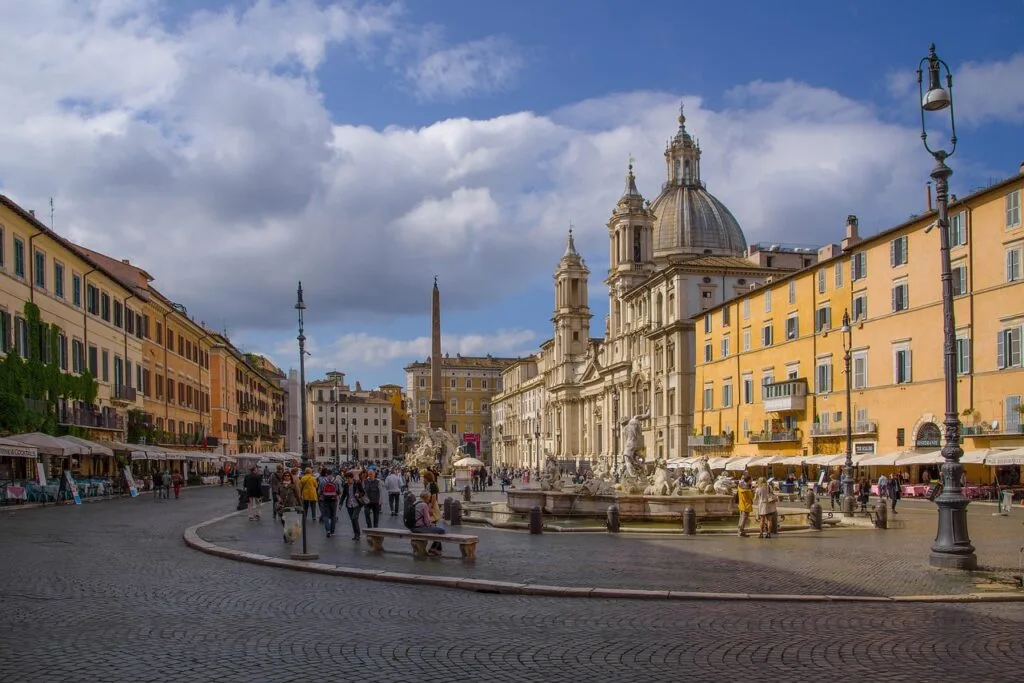
Piazza Navona is one of the most emblematic settings of Roman Baroque, laid out on the massive footprint of Domitian’s stadium. At its center, the Fontana dei Quattro Fiumi (Fontana dei Quattro Fiumi, Piazza Navona, 00186 Roma RM, Italia) is Gian Lorenzo Bernini’s masterpiece (1648). The monument represents the main rivers of the four then-known continents — the Danube, Ganges, Nile and Río de la Plata — carved in white marble, surrounding an Egyptian obelisk. Access is free; the fountain is visible 24/7. Early morning (before 9am) or late evening after 9pm the square clears and the low light reveals the details of sculpted faces and the folds of drapery. 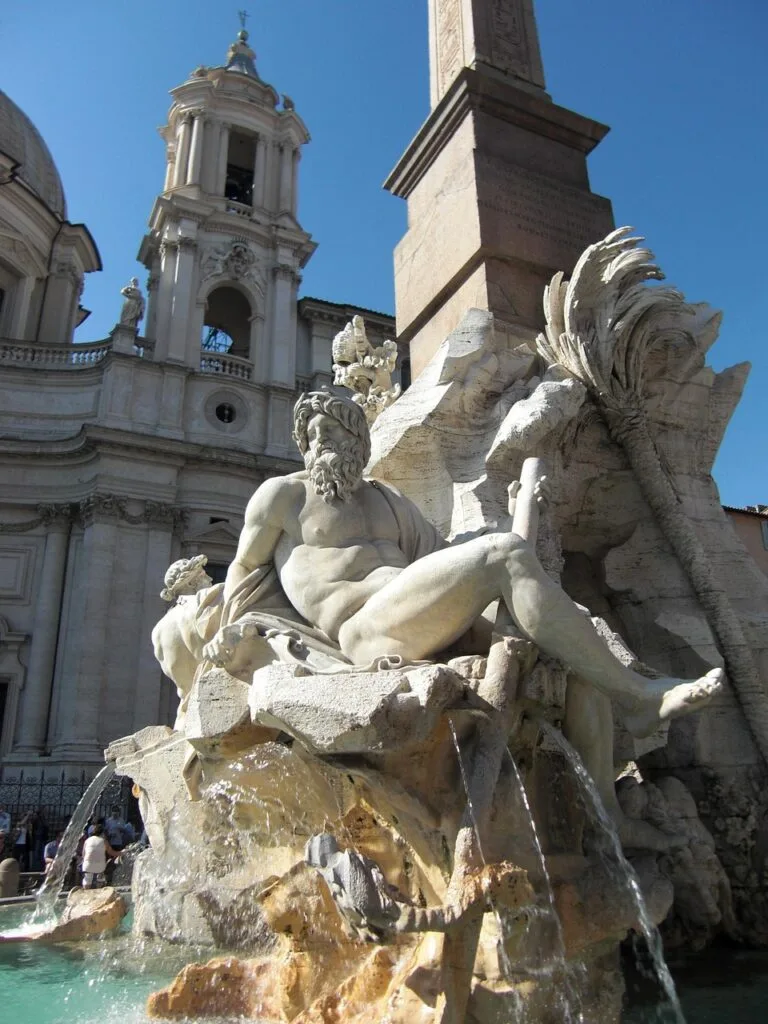
Facing the fountain is the church of Sant’Agnese in Agone (Piazza Navona, 2, 00186 Roma RM, Italia). Exact address: Chiesa di Sant’Agnese in Agone, Piazza Navona, 2, 00186 Roma RM. Hours: generally open 07:30–12:30 and 15:00–19:00 (sometimes closed during Mass); check locally according to the liturgical calendar. Entry: free, donations welcome; guided tours or access to certain areas may be paid (around €3–5 depending on the local organization). This concave façade, designed by Francesco Borromini in dialogue with the square, reads like a theater: the apse and dome lead the eye to the altar, richly decorated with polychrome marbles, stuccoes and frescoes.
Local tips: arrive at opening or after 8pm to enjoy warm light and less crowded photos. Avoid midday in summer: the square is flooded with tourists and street vendors. If you want to hear the church’s voice, consult the Mass schedule at the entrance; attending a Mass allows you to experience the Baroque acoustics, conceived to intensify liturgical speech.
2) The Tridente and Trevi: façade churches and the Fontana di Trevi
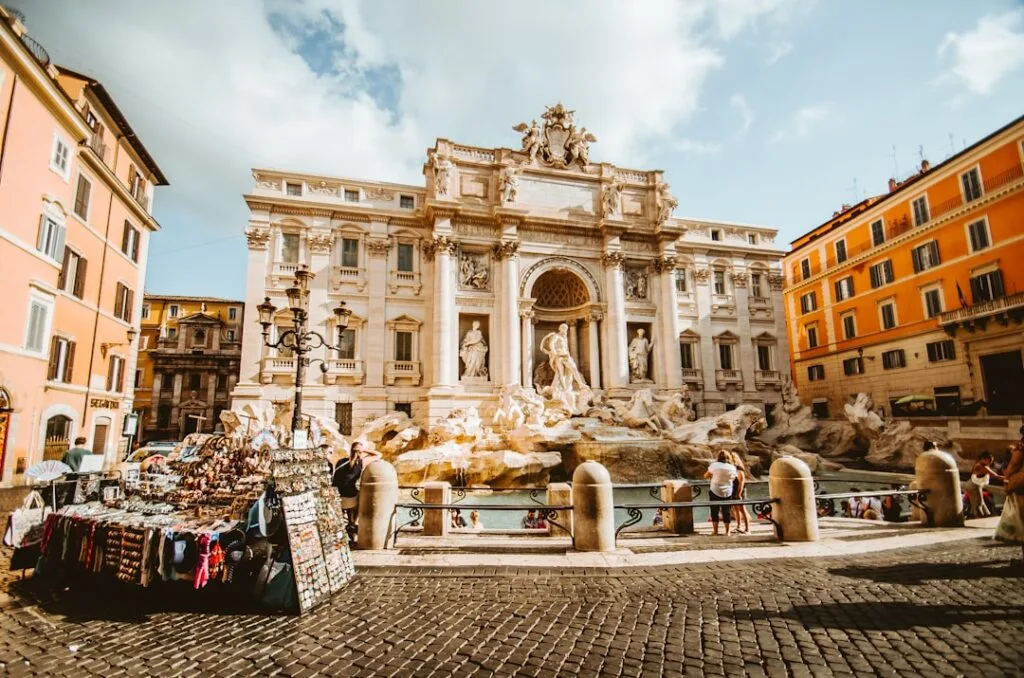
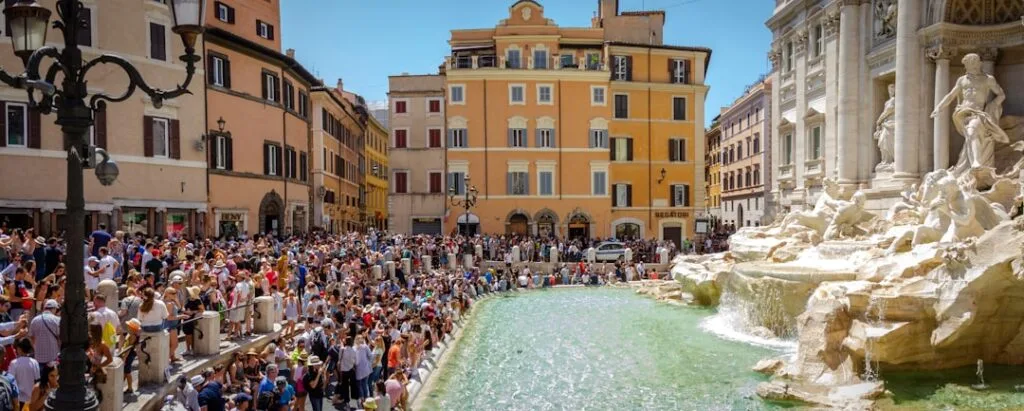
The « Tridente » (the three streets radiating from Piazza del Popolo) leads into Rome’s tourist heart, where the Fontana di Trevi (Fontana di Trevi, Piazza di Trevi, 00187 Roma RM, Italia) reigns as a major Baroque stage. The fountain, designed by Nicola Salvi and finished by Pietro Bracci (1762), is freely accessible at all times. Exact address: Fontana di Trevi, Piazza di Trevi, 00187 Roma RM. Best visiting hours are early morning (5–7am) to avoid the crowds, or late at night after 10pm for a dramatic view under lighting. 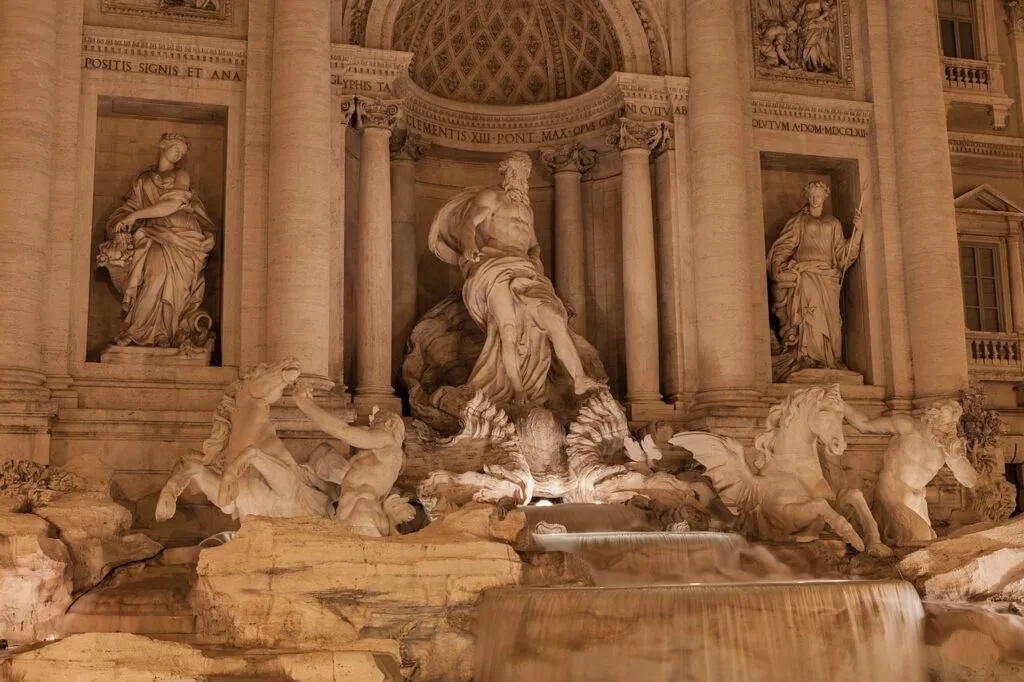
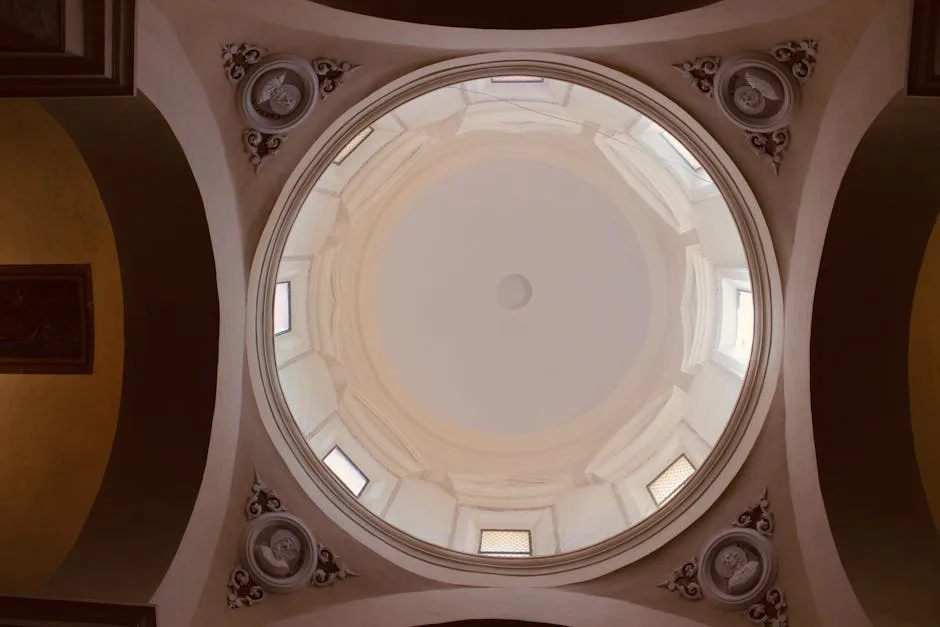
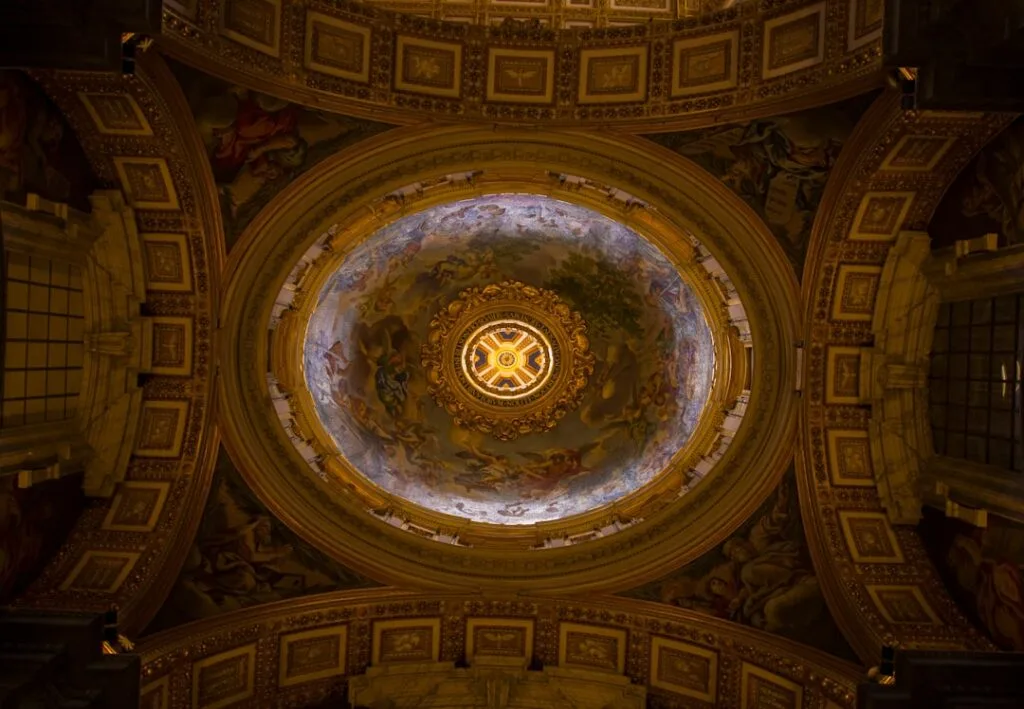
A few steps away, don’t miss the church of San Carlo alle Quattro Fontane (Chiesa di San Carlo alle Quattro Fontane, Via del Quirinale, 18, 00187 Roma RM, Italia), nicknamed « San Carlino », a masterpiece by Francesco Borromini. Address: Via del Quirinale, 18, 00187 Roma RM. Hours: generally 10:00–12:30 and 16:00–19:00, but may vary with services. Entry: free, donations appreciated. The interior surprises with its small size and geometric complexity: an oval dome adorned with stucco motifs that seem to move, playing with natural light. Take time to study the ceiling from the center of the apse: Borromini designed an almost illusionistic perspective.
Practical tips: combine a visit to the fountain and San Carlo in the morning/evening to avoid crowds, and check the renovation status (the fountain has undergone cleanings and temporary scenographies). For a quality nearby coffee, try Caffè Greco (Via dei Condotti, 86, 00187 Roma RM) — historic, not cheap, but extremely picturesque.
 Click here to book a ritual access to the Trevi Fountain
3) The Quirinal and Sant’Andrea al Quirinale: intimate Baroque and panoramas
The Quirinal area brings together more intimate Baroque churches and views that open onto Rome’s urban layout. The Chiesa di Sant’Andrea al Quirinale (Via del Quirinale, 29, 00187 Roma RM, Italy) is a creation by Gian Lorenzo Bernini (1670–1678) and exemplifies learned Baroque: exact address, Via del Quirinale, 29, 00187 Roma RM. Hours: generally open 09:00–12:00 and 15:00–18:30; temporary closures possible for ceremonies. Free entrance, suggested donation (€2–5 if accessing special areas). The church combines an oval plan, dramatic use of light and polychrome marbles that focus attention on the altar and the saint’s figure.
Right next door is the Palazzo del Quirinale (Piazza del Quirinale, 00187 Roma RM), the official residence of the President of the Italian Republic; the square offers a perspective on the Fountain of the Dioscuri and on Baroque urban axes. Although the palace isn’t exclusively sacred Baroque, the nearby gardens and esplanades help understand the dialogue between civic and religious architecture.
Visiting Sant’Andrea al Quirinale means choosing intimacy: few tourists linger there, and the acoustics let you hear every footstep. Tip: if you want a panorama, head up to Via Nazionale or the Quirinal environs for views of roofs and domes; morning light (8–10am) warms the marbles. Dress appropriately if entering: shoulders covered and shorts not too short. If traveling in summer, bring a water bottle; drinking fountains (nasoni) are plentiful in the area.
Which experiences to choose to anchor your Baroque route in Rome?
Want to deepen the visit with guided appointments or privileged access that illuminate the meaning of the sites.
1. Guided visit to the Pantheon
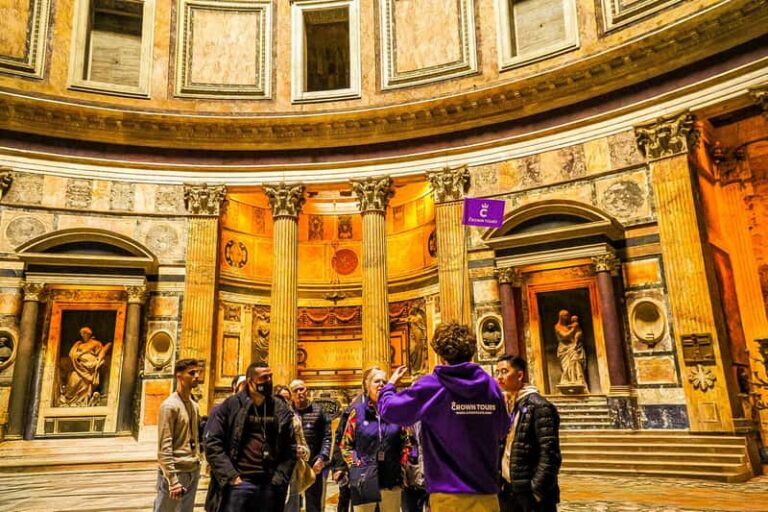
Short guided commentary at the Pantheon to understand its ancient architecture and Baroque reuse: oculus, proportions and tombs explained by a local guide.
- ⏱️ Duration: 45 minutes
- 🎟️ Included: Admission ticket to the Pantheon
- 💡 Highlight: Focused explanation of the oculus and ancient reuse
- 🗣️ Languages: French, English, Italian, Spanish
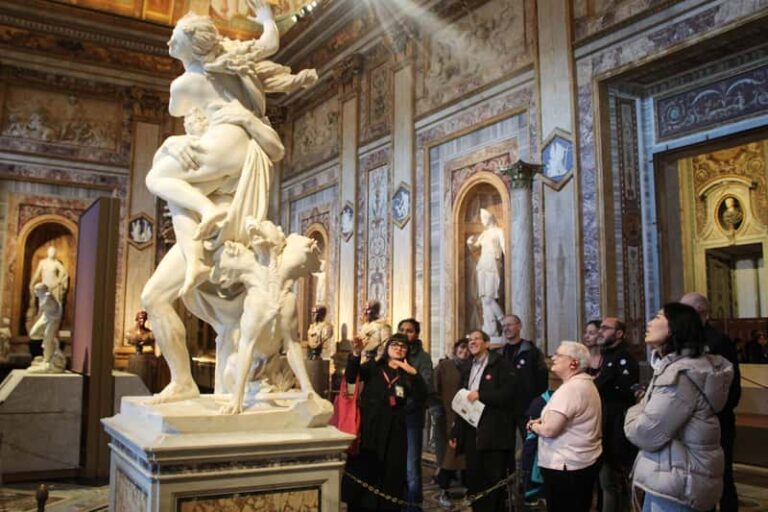
2. Galleria Borghese (priority entry)
Skip‑the‑line access to see Bernini’s Baroque sculptures and paintings by Caravaggio and Raphael in a museum setting that extends the reading of Roman Baroque.
- ⏱️ Duration: 2 hours
- 💡 Highlight: Bernini masterpiece within reach of view
- 👥 Format: Small group (max 15)
- 🎟️ Access: Priority entry (skip‑the‑line)
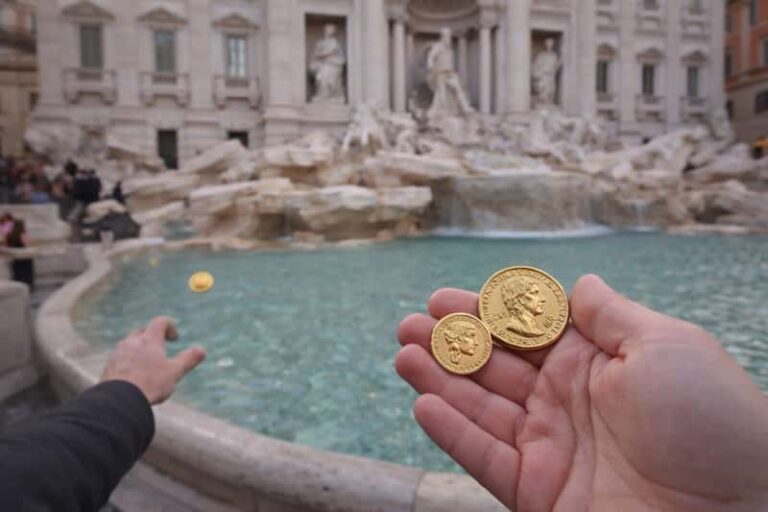
3. Ritual and access to the Fontana di Trevi
Official access to the area near the basin to toss the coin according to the ritual, with audio guide and a small limited group for a calmer, more framed experience.
- ⏱️ Duration: 30 minutes
- 🎟️ Access: Official ticket required (included)
- 💡 Highlight: Designated area to enjoy the ritual without jostling
- 🗣️ Languages: Italian, English, French
4) Pantheon, Chiesa del Gesù and Jesuit axes: grand decorative spectacle
The Pantheon and its surroundings form a circulation hub where Baroque converses with the ancient. Nearby, the Chiesa del Gesù (Chiesa di Gesù, Piazza del Gesù, 49, 00186 Roma RM, Italy) is the mother church of the Jesuit order, founded by Giacomo della Porta and decorated by Giovanni Battista Gaulli (Baciccio). Address: Piazza del Gesù, 49, 00186 Roma RM. Hours: usually open 08:30–12:30 and 15:30–19:30; subject to change for services and events. Free entry, discretionary donation recommended. The interior is notable for the large ceiling fresco (Il Giudizio Universale) and a scenography designed to lift the gaze to the sky — a typical Jesuit Baroque technique to move the faithful.
A few steps away, the small Fontana del Pantheon (Fontana del Pantheon, Piazza della Rotonda, 00186 Roma RM) sits in front of the Pantheon. The fountain, made of a basin and obelisks, contributes to the staging of the square. Access is free. For the Pantheon itself (Piazza della Rotonda, 00186 Roma RM), even if the monument is more ancient than Baroque, its integration into the urban fabric and surrounding Baroque interventions make it a natural stop on the route. Entrance to the Pantheon is often free, but temporary exhibitions may charge admission (check on site).
Tips: plan your visit to the Chiesa del Gesù outside Mass times to enjoy the ceiling uninterrupted. For the Fontana del Pantheon, the best time is at sunrise, when the Pantheon’s stone is bathed in golden light and the piazza is almost empty. Have €1–2 in coins ready for a small donation in the less touristy churches; it helps conservation.
Click here to book the guided tour of the Pantheon and Saint‑Ignatius
Conclusion — Practical tips and suggested itinerary
To make the most of this Baroque route, here’s a practical plan: start early at Piazza Navona for Sant’Agnese in Agone and the Fontana dei Quattro Fiumi, then head to the Tridente for San Carlo alle Quattro Fontane and the Trevi Fountain; in the afternoon, climb toward the Quirinal and Sant’Andrea al Quirinale, then finish near the Pantheon with the Chiesa del Gesù and the Fontana del Pantheon. Allow 4 to 8 hours depending on stops, coffee breaks and attending a Mass or guided tour.
Click here to book your guided tour of St. Peter’s Basilica
Indicative budget: most of the visits mentioned are free (fountains and the majority of churches), but budget €5–15 for donations, extra tickets or access to minor roofs and museums. General opening times: most churches open between 08:00 and 09:00 and close between 18:00 and 19:30; fountains are accessible 24/7. Always check locally for schedule changes due to religious holidays or renovations.
Final local tips: walk, don’t run — Rome is read on foot. Bring comfortable shoes, a shawl or scarf to respect sacred dress codes and a small umbrella in season. Use the “nasoni” (public drinking fountains) to cool off; they’re free and invaluable in summer. If you want photos without people, aim for dawn or after 9pm at major squares. Finally, respect places of worship: keep quiet, no flash during services, and avoid eating or drinking inside.
This route is an invitation to read more deeply into Rome’s Baroque landscape: at every fountain, church or piazza, look for the relationship between the artist, the patron and the city. Baroque in Rome is not just decoration: it’s an urban drama that engages sight, sound and body. Enjoy discovering it, and don’t forget to leave a small contribution to help conserve the places you visit.