


INTRODUCTION
Rome is more than Italy’s capital — it’s a city where Gospel stories come to life through architecture, art and liturgy. A Gospel-themed tour of Rome is about tracing spiritual and historical threads that connect texts, places and traditions. This kind of visit doesn’t just list monuments; it invites you into the scenes, symbols and sites where the Gospel message has been received, interpreted and celebrated across the centuries. Whether you’re a believer, an art lover or simply a curious traveler, this route will give you a fresh way to see Rome — not just as an open-air museum, but as a living stage for Christian stories.
Contenu de l'article
Think of Rome as an open book where each basilica, fresco and crypt tells a chapter of the Gospel narrative. You’ll see how the apostles’ stories, depictions of Christ’s life and liturgical traditions appear in specific places: St. Peter’s Basilica and the tomb of the apostle, the Sistine Chapel where biblical scenes dominate the ceiling, the catacombs where the first Christians gathered, and lesser-known churches full of mosaics and relics linked to Gospel episodes. The itinerary I propose mixes major sites with hidden treasures, offering vast panoramas and intimate moments of reflection.
Preparing for this tour means balancing pace and depth: some stops invite slow contemplation (chapels, mosaics), others benefit from contextual explanation (museums, archaeological sites). Practicalities matter too: book Vatican Museums tickets in advance, save energy for climbing St. Peter’s dome, and time your catacombs visit to avoid the midday heat. I’ll share exact addresses, opening hours, sample prices in euros and practical tips to make your route efficient. I’ll also suggest guided tour options and liturgical experiences — attend a Mass, join a scripture reading or simply sit in a crypt in silence.

Whether you plan a half-day themed walk or a multi-day stay, this article aims to be a comprehensive, immersive and practical guide to experiencing the Gospels in Rome. The selected sites are accessible, meaningful and accompanied by concrete information to ease your visit: precise addresses, opening times, prices, immersive descriptions and local recommendations. Let’s set out on an urban pilgrimage where faith, history and artistic beauty meet.
Why take a Gospel-themed tour in Rome?
Rome is the crossroads of Western Christian history. The city is not only the seat of the Catholic Church but also home to places where Gospel stories have been celebrated, depicted and reflected upon for centuries. A Gospel-themed tour helps you look past tourist clichés: it reveals how biblical episodes inspired artistic masterpieces, liturgical practices and sacred monuments. Moreover, this approach highlights the continuity from Antiquity to the Middle Ages and into modern times — a continuity often visible in the layered history of a single basilica or in the contrast between a Byzantine mosaic and a Baroque painting across the aisle.
At the heart of this journey is the chance for inward reflection. The Gospels speak of walking, encounters, parables and miracles — themes that find tangible echoes in Rome. For instance, St. Peter’s Basilica (Basilica Sancti Petri) on Piazza San Pietro, Vatican City, is both a memorial to the apostle Peter and a space where art tells theology. The Sistine Chapel (Cappella Sistina), inside the Vatican Museums, offers a pictorial reading of biblical stories — Michelangelo’s ceiling is a visual commentary on Genesis that converses with Gospel theology. Further out, Rome’s catacombs, like the Catacombs of San Callisto (Via Appia Antica, 110/126, 00179 Roma), reveal the faith of early Christian communities, their hopes and their martyrs.

From a cultural perspective, a Gospel-themed tour in Rome also sheds light on the Church’s influence on art, urban planning and politics. The major basilicas — San Giovanni in Laterano, San Paolo fuori le Mura, Santa Maria Maggiore — are not only liturgical centers but living archives of Christian memory. They hold relics, reliquaries and mosaics that narrate Gospel scenes, and altars dedicated to saints who helped transmit the Gospel message through time.
Finally, a thematic tour provides moments of contemplation that differ from a purely tourist experience. Attending a morning Mass, pausing in silence before a fresco, or descending into a crypt to read a Gospel passage adds a spiritual — even educational — layer to your trip. The rest of this article gives a detailed itinerary, site descriptions and practical tips so your Gospel tour of Rome is both rewarding and well organized.
Suggested itinerary: three thematic days in Gospel Rome
Day 1: Papal heart and Gospel sources — Start at the Vatican, the spiritual and artistic center of Western Christianity. Head to the Vatican Museums, Viale Vaticano, 00165 Roma. Opening hours: usually Monday–Saturday 9:00–18:00 (last entry 16:00), closed on Sundays except the last Sunday of the month when entry is free (hours subject to change). Price: around €17 online (standard ticket) plus a typical booking fee of €4. Immersive description: stroll through the Gallery of Maps and the Raphael Rooms before you reach the Sistine Chapel — a moment when Michelangelo’s ceiling converses with biblical themes and Creation. Book your time slot in advance to avoid long lines.
 Click here to book your ticket for the Vatican Museums and the Sistine Chapel

Continue to St. Peter’s Basilica, Piazza San Pietro, 00120 Città del Vaticano. Hours: typically 7:00–19:00 (varies by season and ceremonies). Entry to the basilica is free, but climbing the dome is ticketed (lift + 320 steps: ~€12, stairs only: ~€8, prices indicative). Inside, see Michelangelo’s Pietà, Bernini’s Baldachin and the Confessio — a symbolic site linked to the apostle Peter. Tip: arrive early to beat the crowds and dress modestly (shoulders and knees covered).
Click here to book a guided tour of St. Peter’s Basilica

Day 2: The major basilicas and their stories — Start at San Giovanni in Laterano, Piazza di San Giovanni in Laterano, 4, 00184 Roma. Hours: 7:00–18:30 (variable). Free entry; the museum and cloister have a fee (≈€6). This cathedral of the Diocese of Rome is rich in mosaics depicting Gospel scenes and portraits of bishops. Then head to the Basilica of Santa Maria Maggiore, Piazza di Santa Maria Maggiore, 42, 00185 Roma, generally open 7:00–19:00. Admire the Nativity mosaic and the Pauline Chapel which links to Nativity narratives.

Day 3: Underground roots and popular traditions — Visit the Catacombs of San Callisto, Via Appia Antica, 110/126, 00179 Roma. Hours: often 9:00–12:00 and 14:00–17:00 (check seasonally). Price: around €8–10. Here you’ll get a sense of how the first Christians lived and worshipped on the margins of Roman society. Then descend into San Clemente Basilica, Via Labicana, 95, 00184 Roma (usually open 9:00–12:30 & 15:00–18:30), entrance ≈€10, to explore its stacked levels: a 12th-century basilica on top of a pagan temple and a 4th-century church, illustrating how pagan traditions and Christianity intertwined in the transmission of the Gospel message.
Click here to book a guided tour of the Catacombs of Saint Callixtus

This three-day plan can be tailored to your interests: art, archaeology, liturgy or meditation. Thematic guided tours (generally €25–40 per person for a group) can deepen your understanding of texts and Gospel symbolism on site.
Detailed visits to key sites: addresses, hours, prices and immersive descriptions
1) St. Peter’s Basilica (Basilica Sancti Petri) — Address: Piazza San Pietro, 00120 Città del Vaticano. Hours: typically 7:00–19:00. Prices: free entry; dome climb ≈ €8–12. Description: St. Peter’s Basilica is where Baroque architecture and devotion merge. The huge nave, side chapels, Michelangelo’s Pietà and Gian Lorenzo Bernini’s Baldachin create a theological stage set. The space invites meditation on Gospel themes of service, sacrifice and resurrection. Tip: expect security checks and lines; choose a morning Mass for a more authentic, less tourist-heavy experience.
Click here to book full access to St. Peter’s Basilica (dome and tombs)

2) Vatican Museums and Sistine Chapel — Address: Viale Vaticano, 00165 Roma. Hours: 9:00–18:00 (last admission 16:00), usually closed on Sundays except for special openings; price: ≈ €17 online plus fees. Immersive description: the Sistine Chapel, at the end of the museum route, offers a visual reading of Genesis and human destiny — a complement to Gospel themes of creation, sin and grace. Other highlights: the Raphael Rooms (biblical scenes and allegories), the Vatican Pinacoteca (religious paintings), and the Gallery of Maps, ideal for seeing how the Church represented the world.
Click here to book your ticket for the Vatican Museums and the Sistine Chapel

3) San Giovanni in Laterano — Address: Piazza di San Giovanni in Laterano, 4, 00184 Roma. Hours: 7:00–18:30. Free entry; museum/cloister ≈ €6. Description: as the cathedral of the Diocese of Rome, it houses mosaics that narrate the life of Christ and the apostolic succession. The church symbolizes the role of the Church in transmitting the Gospel. Tip: don’t miss the nearby Scala Santa (Holy Stairs), a historical and devotional climb.

4) Basilica of San Paolo fuori le Mura — Address: Piazzale San Paolo, 00146 Roma. Hours: 7:00–18:30. Free entry. Description: dedicated to the apostle Paul, this basilica features mosaics and arcades bearing the names of popes. The atmosphere is often quieter than St. Peter’s, making it a good spot for prayer and reflection on the evangelical mission. Tip: combine your visit with the Abbey of San Paolo to catch Gregorian chant performances if available.

5) San Clemente Basilica — Address: Via Labicana, 95, 00184 Roma. Hours: usually 9:00–12:30 & 15:00–18:30. Price ≈ €10. Immersive description: this multi-layered church lets you read history in strata: a medieval basilica above a 4th-century church and a pagan sanctuary. Frescoes and relics evoke local Gospel episodes and ancient devotional practices. Tip: the underground levels are invigorating — wear sturdy shoes and take your time to absorb the atmosphere.

Immersive and liturgical experiences linked to the Gospels
Attend the liturgy: To experience the Gospels in action, join a Sunday or daily Mass. At St. Peter’s Basilica, Masses can be very crowded — papal Masses draw large crowds and often require reservations via the Vatican office. Smaller, more intimate Masses happen in chapels like those at San Giovanni in Laterano or Santa Maria in Trastevere (Piazza di Santa Maria in Trastevere, 00153 Roma, usually open 7:30–21:30), where the proximity makes the Gospel readings easier to hear and reflect on.

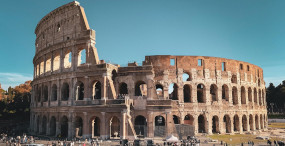
Paths for meditation: Several churches offer Gospel meditation routes — the Stations of the Cross (Via Crucis) at the Colosseum (Piazza del Colosseo, 00184 Roma) on Good Friday, or pilgrimage walks between the major basilicas. The Colosseum and Palatine Hill provide a historical setting for reflecting on the Passion of Christ, although the connection is largely symbolic and modern.

Workshops and readings: Some associations and parishes run Bible study workshops and guided readings in museums or churches (costs vary, often €10–25). A recommended option is to book a thematic guided tour with an art historian or theologian who can link frescoes, mosaics and Gospel texts in an educational way.
Music and sacred chant: Look for Gregorian chant or sacred music concerts in venues like the Basilica of San Paolo fuori le Mura or Santa Maria Maggiore. These events deepen the reception of Gospel texts through listening and contemplative sound.
Practical tips: logistics, safety, budget and local good practice
Tickets and reservations: For the Vatican, book tickets online to cut waiting time — indicative price €17 + booking fee €4. For the St. Peter’s dome climb, expect €8–12. Catacombs sometimes require group bookings; price around €8–10. Major basilicas are usually free, but attached museums (Vatican Museums, basilica museums) charge admission.
Hours: Churches open early (7:00–8:00) and close in the evening (17:00–19:00); museums keep stricter hours (generally 9:00–18:00). Always check official websites since times change with liturgical feasts and seasons.
- Dress code: cover shoulders and knees in sacred places.
- Security: expect checks at Vatican entry and some major basilicas; avoid large bags and have your documents ready.
- Transport: Metro Line A for the Vatican (Ottaviano–S. Pietro station); Metro Line B for the Colosseum (Colosseo station); buses and trams serve other sites. For the Appian Way (catacombs), bus 218 and tourist services are convenient.
- Costs: suggested daily budget €30–60 (admissions, transport, coffee), more if you book private guided tours (≈€25–80 per person depending on group size and specialty).
- Best time: early morning for big basilicas and late afternoon for less-crowded museums; avoid peak season (summer) if you can for cooler weather and fewer crowds.

Respect and local etiquette: avoid flash photography in museums and the Sistine Chapel; observe silence zones in chapels and crypts; ask before photographing liturgies or worshippers. Finally, support local parishes if you attend Mass by leaving a modest donation (a few euros).
CONCLUSION
Taking a Gospel-themed tour of Rome means choosing to see the city with different eyes: not just a collection of monuments but a living network of stories, images and practices. This route blends history, art and spirituality; it confronts you with major masterpieces — like the Sistine Chapel and St. Peter’s Basilica — and quieter treasures — like the catacombs and the layered churches of San Clemente. The addresses and practical details here (hours, approximate prices, visitor tips) will help you plan your urban pilgrimage efficiently. Remember that the heart of a Gospel visit isn’t simply ticking boxes, but taking the time to read, contemplate and be moved by the images and spaces you encounter.

When planning your route, mix major stops with pauses: a morning Mass, a reading session in a chapel, a slow descent into a crypt. If possible, book a thematic guided tour (an art historian or religious guide) to more explicitly connect Gospel texts to the works and sites. Above all, approach your visit with respect and curiosity: Gospel Rome is at once museum, archaeological site and living sanctuary — a city where past and faith meet on every corner.