


Introduction — Rome: One City, a Thousand Religious Faces for Photography
Rome is a city where stone tells stories of faith, art and history in a single frame. For the religious photographer — whether pro, serious enthusiast or pilgrim seeking to capture visual grace — Rome offers a unique route: colossal basilicas, jewel‑box chapels, subterranean crypts and Baroque perspectives that turn light into feeling. This article presents a religious photo itinerary designed to inspire, organize and help you get the most from your shots, with exact addresses, prices, opening hours and practical tips.
Contenu de l'article
Beyond the famous monuments, I invite you to focus on details: shimmering mosaics, stained glass filtering light, pillars polished by centuries of hands, and the faces of worshippers in prayer — all powerful subjects that build a visual story. The route is realistic: it takes into account queues, strict church rules on flash and tripods, and the need to book certain visits in advance, notably St. Peter’s Basilica and the Vatican Museums.
Whether you’re aiming for the majesty of Bernini’s dome, the intimate frescoes of a chapel left almost untouched by time, or the play of light in a crypt, this itinerary guides you step by step. Each stop includes precise information: full address, entrance fee in euros, typical opening hours (check before you go), tips to capture the best light and local practical recommendations — metro, bus and dress considerations. The photographic narrative suggested here is calibrated for a 3–5 day stay, adaptable to your pace and sensibility.
Finally, the itinerary doesn’t stop at the must‑sees; it suggests detours through alleys, squares and viewpoints that offer original framing. Photographing Rome also means composing with its residents, its soundscape, cafés and public gardens that often surround sacred sites. Pack extra memory cards and chargers: you’ll need patience and a curious eye. Follow this route step by step, and let Rome inspire your vision.

Vatican and St. Peter: The Spiritual and Photographic Heart
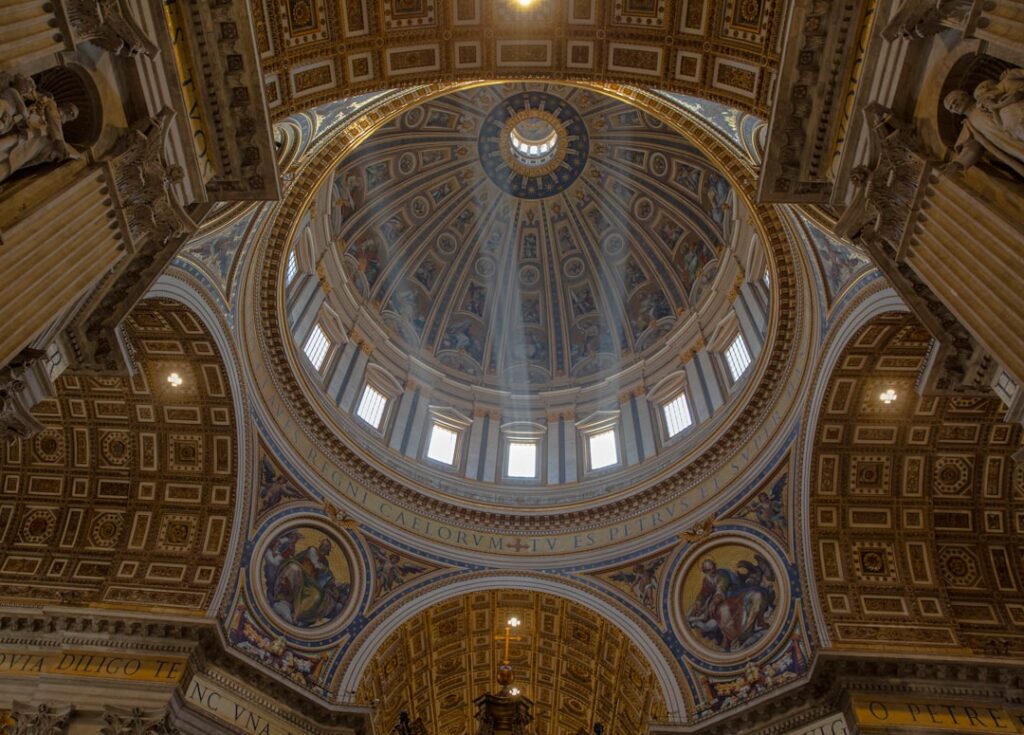
The Vatican City concentrates Rome’s artistic and religious power. Start with the Basilica di San Pietro (Piazza San Pietro, 00120 Città del Vaticano). Entry: the basilica itself is free; the climb to the dome usually costs €10 with elevator + stairs or €8 by stairs only (prices subject to change). Hours: the basilica typically opens from 07:00 to 19:00 (May to September) and from 07:00 to 18:30 (October to April). At dawn and dusk, St. Peter’s Square becomes an ideal stage for symmetrical compositions and long perspectives.
Photo tips: favor the gold light of morning and twilight to capture stone and gilding without the crowds. Inside, light is often low; a fast lens (f/2.8 or faster) and sensible ISO control are essential. Note: tripods are generally forbidden in the basilica without permission, and flash is prohibited. If you want sunrise from the terrace, book the dome in advance — spots are limited. From the dome, take in the view over St. Peter’s Square and the city of Rome: a 70–200mm telephoto will isolate architectural details and Bernini’s colonnades.
Next, book a visit to the Musei Vaticani (Viale Vaticano, 00165 Roma), home to the Sistine Chapel and countless masterpieces. Price: standard online tickets range around €17 to €30 depending on options (audio guide, skip‑the‑line). Hours: generally 09:00–18:00 (closed Monday varies, check the calendar for public holidays). The Sistine Chapel forbids flash photography and often forbids any picture taking — respect these rules to avoid fines or ejection.
For lesser‑seen images, explore the Vatican Museums early in the morning (very early access or night openings if available) to catch galleries emptied of visitors. The contrast between lavish decoration and pockets of shadow creates opportunities for dramatic compositions. Don’t miss the Galleria delle Carte Geografiche for its converging lines and the Camera degli Angeli for inlaid details and gilding.
 Click here to book your guided tour of St. Peter’s Basilica
Click here to book your Vatican Museums tickets

For less familiar images, explore the Vatican Museums early in the morning (very early visits or night openings where available) to capture galleries emptied of crowds. The contrast between lavish decorations and pockets of shadow creates dramatic composition opportunities. Remember the Galleria delle Carte Geografiche for its converging lines and the Camera degli Angeli for intricate marquetry and gilded details.

Basilica and Major Basilicas of Rome: San Giovanni, Santa Maria Maggiore and More
Outside the Vatican, Rome has several major basilicas that offer rich and varied photographic subjects. Start with the Basilica di San Giovanni in Laterano (Piazza di San Giovanni in Laterano, 4, 00184 Roma). Entry: free; the exceptional façade and the colossal Baroque interior merit multiple framings. Hours: typically 07:00–18:00. The cloister and the statues of the popes on the façade are powerful subjects at sunrise or sunset.

The Basilica di Santa Maria Maggiore (Piazza di Santa Maria Maggiore, 42, 00185 Roma) is another must. Entry: free. Hours: usually 07:00–18:30. Inside, seek the central nave and the 5th‑century Byzantine mosaics: filtered light on the mosaics produces a golden rendering that modern sensors love to capture. The side chapels, often less crowded, are ideal for detail portraits — altars, bas‑reliefs and carved capitals.
Less known but remarkable for religious archaeology photography, the Basilica di San Clemente (Via Labicana, 95, 00184 Roma) offers three historical levels: the medieval basilica, the 4th‑century building and underlying Roman structures. Fee: about €10. Hours: roughly 09:00–12:30 and 15:30–18:30, but check before you go. The underground levels provide low‑light atmospheres with painted walls and mosaics; a fast lens, solid stabilization and careful ISO management are essential.
Click here to book your ticket for Santa Maria Maggiore

Shooting these basilicas requires tact and respect: wear clothing that covers shoulders and knees, avoid full‑length shots during ceremonies and ask permission before photographing people in prayer. The best times are early morning (07:00–09:30) and late afternoon (16:00–18:30). For compositions, play with the leading lines of the naves, reflections on marble and backlighting from stained glass.

Pantheon, Ancient Churches and Rome as a Palimpsest
The Pantheon (Piazza della Rotonda, 00186 Roma) — an ancient temple converted into a church — is a perfect example of religious and architectural layering. Paid entry: about €5 (for courtyard and nave access); hours: generally 09:00–19:00 (seasonal variations). Photograph the central oculus in backlight to capture the shaft of light that models volumes and highlights the dome. A wide‑angle is ideal for exploiting the immense vault, while a zoom lets you isolate tombs, including Raphael’s and some monarchs’ graves.
Click here to book your guided Pantheon visit with ticket

Nearby, the Basilica dei Santi Cosma e Damiano (near the Roman Forum) and the Basilica di San Pietro in Vincoli (Piazza di San Pietro in Vincoli, 4A, 00184 Roma) offer more intimate subjects. Entry: free for most; hours vary (often 09:00–18:00). San Pietro in Vincoli houses Michelangelo’s famous Moses: capture the shadow play on the marble folds with side lighting.
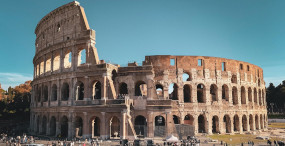
Stroll through the Roman Forum and Palatine area to find remains of ancient religious buildings and rare perspectives. Although archaeological sites aren’t exclusively religious, the transition from ancient temples to paleochristian basilicas and medieval chapels is tangible and very photogenic. Combined Colosseum/Forum/Palatine ticket: about €16–€22 (depending on options). Hours: variable, often 08:30–19:00 in high season.

Trastevere, Crypts and Lesser‑Known Sacred Spaces
Cross the Tiber to reach Trastevere and you’ll enter a more intimate chapter of Rome’s religious life. The Basilica di Santa Maria in Trastevere (Piazza di Santa Maria in Trastevere, 3, 00153 Roma) is perfect for mosaic portraits and street scenes. Entry: free; hours: usually 07:30–21:00. The lively square lets you juxtapose daily life and the sacred in the same frame.

Below Rome’s surface, crypts offer unique atmospheres: think of the Crypta Balbi (Via delle Botteghe Oscure) and the many catacombs (Catacombe di San Sebastiano, Via Appia Antica 136, 00179 Roma; prices vary, guided tour required about €8–€12). Catacombs have restricted hours (often 09:00–12:00 and 15:00–17:00) and require appropriate clothing — it’s cool and damp inside. Low‑light images need a good balance between noise and sharpness; favor a fast lens and experiment with longer exposures if a monopod is allowed.
Click here to book a guided tour of the Catacombs of St. Sebastian

Another tip: look for churches described as “open but quiet,” where locals come to pray undisturbed. Documentary photography is valuable there but requires discretion — use longer focal lengths to capture natural scenes without disturbing people. Also scout small neighborhood chapels where altarpieces and ex‑votos tell popular stories that are highly photogenic.

Practical Day‑by‑Day Itinerary and Local Tips
Here’s a sample 3‑day religious photo itinerary, adaptable to your interests:
- Day 1 (Vatican): Morning at Basilica di San Pietro (07:00–10:00), climb the dome. Afternoon at the Musei Vaticani and Sistine Chapel (book ahead). Evening for square perspectives.
- Day 2 (Major Basilicas): Morning at Santa Maria Maggiore then San Giovanni in Laterano. Afternoon at San Clemente and the underground levels. End of day to photograph golden façades.
- Day 3 (Pantheon, Trastevere and Catacombs): Morning at the Pantheon then wander to central churches (San Luigi dei Francesi for Caravaggio works). Afternoon in Trastevere and, time permitting, visit the Catacombe di San Sebastiano or Domitilla.
Local practical tips:
- Transport: use the metro (lines A and B) and the ATAC bus/tram network. Closest station to the Vatican: Ottaviano‑San Pietro (Metro A). For San Giovanni: San Giovanni (Metro A). The Pantheon is walkable from Piazza Navona.
- Tickets and reservations: buy Vatican Museums and Colosseum tickets online to skip the queues. Early access guided tours are a major advantage for photography.
- Dress: respect church dress codes (shoulders and knees covered). Some churches may refuse entry for inappropriate clothing.
- Gear: 16–35mm lenses for interiors, 24–70mm for versatility, 70–200mm for details. An external flash is unnecessary and often banned; bring a small stabilizer or monopod if permitted.
- Safety: watch out for pickpockets in tourist areas. Keep your gear in a closed bag and your valuables close at hand.
- Ethical practices: ask permission for portraits, avoid shooting during services if it disturbs worshippers, and obey “no photography” signs.

Conclusion — Crafting a Visual Narrative of Faith in Rome
Photographing Rome’s religious soul means building a visual narrative where each place becomes a chapter. From the grandeur of the Basilica di San Pietro to the silent crypts of San Clemente, every stop offers textures, colors and stories to tell. By combining preparation — booking tickets, choosing lenses, knowing opening hours — with sensitivity in the field — respect for worshippers, discretion and adapting to light — you’ll create a series of images that goes beyond tourism and touches something universal.
Remember that Rome reveals itself in details: a carved capital, a partially worn mosaic, an old door opening onto a quiet courtyard. Take time to stray from the tourist routes to discover scenes that tell the story of everyday religious life. Book early morning and late evening slots to free your frames from crowds and use the magical light that transforms marble and gold.
Finally, treat this itinerary as a flexible guide: a handful of unmissable sites to photograph, but also pauses to savor a cappuccino and let images form. Rome rewards patience and observation. Take these practical tips — exact addresses, prices, hours and local rules — and let the Eternal City inspire your view. Your photos will then reflect a spiritual and visual journey, where each shot tells a piece of history and faith.